REVIEW · AUCKLAND
Explore Auckland: Self Guided Audio Tour
Book on Viator →Operated by Citywalksz Ltd · Bookable on Viator
Auckland hits different when you can walk it on your schedule. This self-guided audio tour is built for an easy stroll between standout sights, and I like that the GPS map helps you keep moving without constantly checking your phone. The audio is also a big plus for learning while you walk, but one drawback is that you’ll need to be comfortable managing a downloaded ticket and working out the route yourself.
You’ll start at Sky Tower and follow a set of stops through Auckland’s city core, with about 1 to 3 hours to take it all in. Admission isn’t included for the listed highlights, so think of this as a high-quality way to see and understand the area first—then choose what you want to pay to enter.
In This Review
- Key Highlights You’ll Actually Feel During the Walk
- Price and Timing: What $15.29 Gets You
- Getting Started at Sky Tower: Mobile Ticket and Download Time
- Walking the City Core: Your Main Route and What to Notice
- Stop 1: Sky Tower (Admission Not Included)
- Stop 2: St Matthew-in-the-City Church (Corner of Hobson and Wellesley)
- Stop 3: Aotea Square (Opened to the public in 1979)
- Stop 4: Statue of Sir Dove-Myer Robinson (Toby Twiss sculpture)
- Stop 5: Baptist Tabernacle (1884, based on a London model)
- Stop 6: Auckland Art Gallery / Toi o Tamaki (Art across cultures and time)
- Stop 7: Albert Park and the sculpture Gateway
- What You’ll Learn (and How the Audio Helps)
- Comfort and Pacing: Plan for Hills and Phone Time
- Admission Fees and Paid Stops: Know What’s Extra
- Who Should Book This Audio Tour (and Who Might Want a Different Option)
- Should You Book Explore Auckland: Self Guided Audio Tour?
- FAQ
- How long does the Explore Auckland self-guided audio tour take?
- Where does the tour start and end?
- What’s included in the price?
- Do I need to pay admission tickets for the stops?
- Is the tour available in languages other than English?
- Is the tour suitable if I’m not very active?
Key Highlights You’ll Actually Feel During the Walk

- MP3 audio plus a GPS map so you don’t have to rely on spotty signage
- Repeatable commentary, which is great when you want to pause, take photos, and catch details again
- A stop-focused route that keeps you on track through the city center
- Landmarks with story, from the 19th-century Baptist Tabernacle to major art collections at Toi o Tamaki
- Small group cap (up to 18) for a more controlled experience, even though it’s self-paced
- Designed for flexibility, since you can go slower, re-listen, and take breaks
Price and Timing: What $15.29 Gets You
At $15.29 per person, this tour is priced like a budget-friendly city walkthrough rather than a full-service guided day. I think that’s the smart way to look at it: you’re paying for the audio files, the route guidance, and the GPS map—not for transport, meals, or entry tickets.
The total time is about 1 to 3 hours, which is perfect when you want Auckland without committing to a half-day tour. Also, it’s reportedly booked around 40 days in advance, which suggests it’s popular enough that you’ll want to lock it in early if you’re traveling in peak season.
One practical note: admissions at major stops (like Sky Tower) are not included, so the “tour cost” is only part of your sightseeing budget. If you plan to enter several paid attractions, set aside a little extra cash.
You can also read our reviews of more guided tours in Auckland

Getting Started at Sky Tower: Mobile Ticket and Download Time
Your starting point is Sky Tower, Auckland Central. The tour uses a mobile ticket, and the most important step is downloading your audio file and making it ready before you start walking.
If you’ve ever shown up to a self-guided experience and realized your phone only has half the files, you’ll appreciate this warning: give yourself a few minutes to get the MP3 and map working while you’re still near the start. The tour info is clear that downloading instructions are in the ticket’s before-you-go section.
You’ll also need to provide your own audio device, since one isn’t included. If you’re traveling with someone else, you’ll each want access to your audio setup so you don’t end up waiting at every stop.
Language is English only, so it’s straightforward if you read and listen comfortably in English.
Walking the City Core: Your Main Route and What to Notice
The route is designed for a moderate walking level. One thing to take seriously: this area includes hills, so comfortable walking shoes matter. Even if you don’t plan to sprint from stop to stop, your legs will notice the gradient.
Here’s what you can expect as you move from landmark to landmark. Each stop is set for around 15 minutes, but you can adjust based on your interests.
Stop 1: Sky Tower (Admission Not Included)
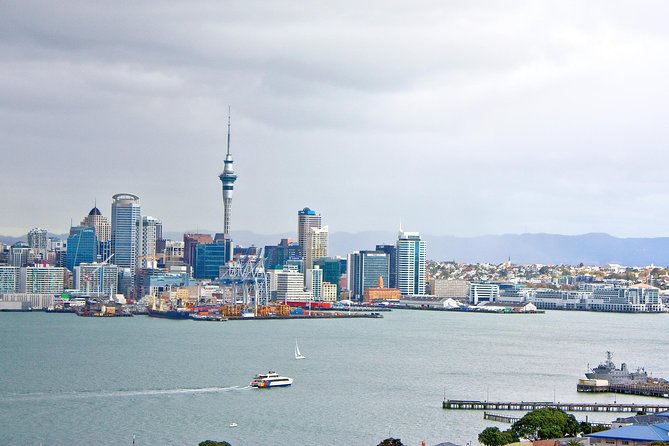
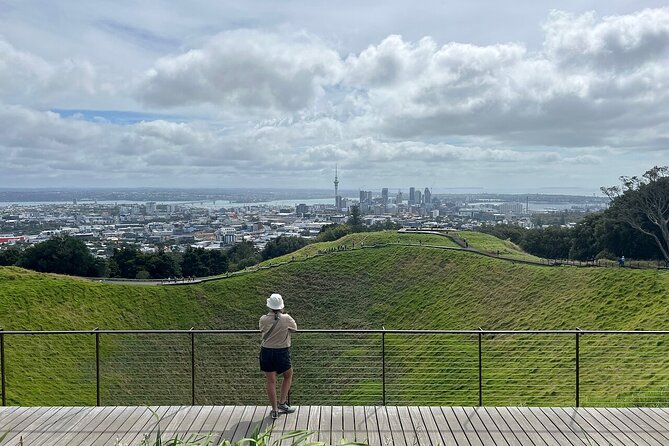
Sky Tower is the starting point and a useful reference for orientation. Even if you don’t buy a ticket to go up, it’s a strong way to begin because you’re standing in the center of the city’s skyline.
Why this stop works on a self-guided audio route: it gives you a “big landmark” start, then the audio can help shrink the city into a story you can follow on foot.
Stop 2: St Matthew-in-the-City Church (Corner of Hobson and Wellesley)
This church sits on the corner of Hobson and Wellesley Street, and the background is part of why the audio tour is worth it. The land was bought from the Crown in 1843 by Bishop George Augustus Selwyn, and the building’s early construction is explained in the commentary.
If churches aren’t your thing, you may still enjoy this stop because the audio frames it as a sign of Auckland’s early development—not just an attractive building.
You can also read our reviews of more tours and experiences in Auckland

Stop 3: Aotea Square (Opened to the public in 1979)
Aotea Square is adjacent to Queen Street, and it has a clear timeline in the audio—originally opened to the public in 1979 by Sir Dove-Myer Robinson, the former mayor of Auckland.
I like this stop because it’s a “breather” space. It’s easy to pause here, stand back, and match what you’re hearing with what you’re seeing around the square.
Stop 4: Statue of Sir Dove-Myer Robinson (Toby Twiss sculpture)
Right around this area, you’ll find the Toby Twiss sculpture of Sir Dove-Myer Robinson. The audio connects you to the person behind the city leadership—he was the longest serving mayor of Auckland.
This is a good example of how the tour’s audio turns a statue into context. Without it, you might just glance and move on.
Stop 5: Baptist Tabernacle (1884, based on a London model)
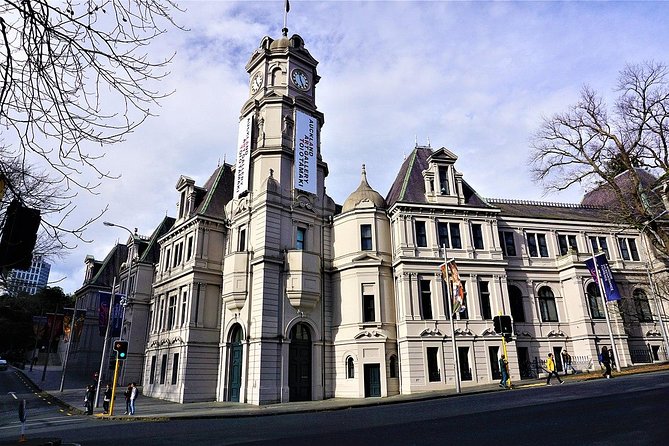
The Baptist Tabernacle is one of the more story-heavy stops on the route. It was built in 1884, designed by architect Edmund Bell, and it’s described as being based on the Metropolitan Tabernacle in Elephant and Castle, London.
I find that connection fascinating because it shows how Auckland imported ideas (and architectural inspiration) while still building its own identity. If you enjoy learning how places adapt and reuse influences, this will be a highlight.
Stop 6: Auckland Art Gallery / Toi o Tamaki (Art across cultures and time)
The route includes the Auckland Art Gallery, also known as Toi o Tamaki. The audio describes works from 1376 and includes artists from Maori, Pacific Islander, and European backgrounds.
This stop is where the tour shifts from “city landmarks” into “big cultural institutions.” If you’re an art person, you might want to spend longer than 15 minutes here. If you’re more in it for the walking and history, you can still enjoy the outside context and move on.
Stop 7: Albert Park and the sculpture Gateway
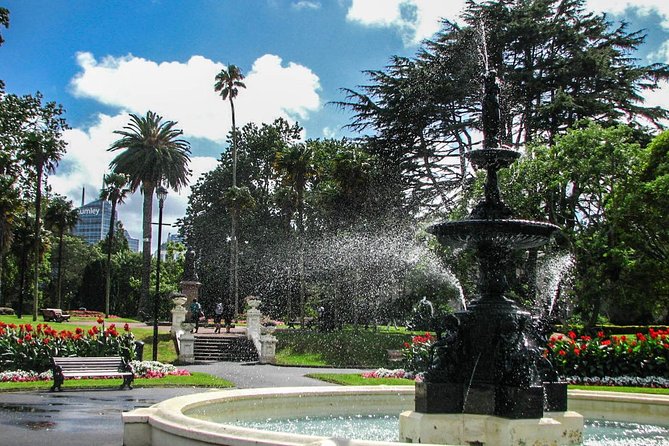
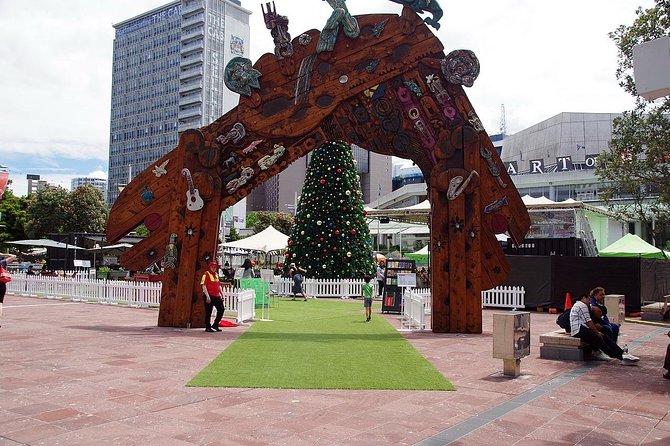
Albert Park is a relaxing pocket in the middle of city movement. The stop centers on a sculpture titled Gateway by Chris Booth, placed among ferns and living pohutukawa trees near a busy intersection.
This is the kind of stop that makes the whole route feel balanced: you get landmark architecture, then a little nature and design in one place. It’s also a good spot to catch your breath and reset before you continue.
What You’ll Learn (and How the Audio Helps)

The best part of a good self-guided audio tour is that it keeps you thinking while you walk. This one is built around Auckland’s layered story across centuries, with the audio tying together what you’re seeing street-by-street.
A few practical ways this tour helps you:
- You can listen at your own pace, then pause for photos without losing the thread.
- If you want more detail, you can re-listen rather than guessing what you missed.
- The commentary is designed to explain the meaning behind landmarks, not just name them.
Also, since it’s available in English, you don’t have to work around language switching or translations.
Comfort and Pacing: Plan for Hills and Phone Time
The tour is self-paced, but the city isn’t flat. Expect some walking up and down hills, so don’t treat the 1 to 3 hour duration as “easy mode.” It’s more like: you’ll cover a chunk of the city core at a moderate pace.
Here’s how I’d plan it so you enjoy it rather than just survive it:
- Wear comfortable walking shoes (seriously).
- Give yourself a couple of minutes at the start for download and map setup.
- Build in a buffer if you like stopping often for photos.
One more practical consideration: self-guided tours rely on your ability to get the audio working. If you run into issues, the downside is that you won’t have a physical guide standing next to you. If you’re not comfortable troubleshooting phone downloads on the go, try to test everything before you begin.
Admission Fees and Paid Stops: Know What’s Extra
Admission isn’t included across the tour highlights. For example, Sky Tower at the start explicitly notes that admission tickets are not included. The same idea applies to the listed sights: you’ll likely be paying separately if you want to enter certain places or viewpoints.
That doesn’t make the tour less valuable—it just changes how you budget. Think of this audio guide as the part that helps you make sense of the city. Then you decide whether any paid experiences are worth it for you.
Who Should Book This Audio Tour (and Who Might Want a Different Option)
I’d recommend this tour if you:
- Want a flexible walking experience that works for solo travelers or small groups
- Enjoy learning from audio without the pressure of a group schedule
- Like being able to re-listen when you want more detail
- Prefer seeing the city at your own speed, with time for photos and pauses
You might want to skip it if you:
- Expect a staff member to solve phone or download problems on the spot
- Don’t want to deal with a downloaded MP3 and GPS map setup
- Need a fully hosted experience with a human guide doing all the navigation
Should You Book Explore Auckland: Self Guided Audio Tour?
If you’re visiting Auckland for a short time and you want a smart way to connect the streets with the stories, this is a solid buy. For $15.29, you get guided audio and a GPS map that turn a simple walk into a clearer city experience, with landmark stops that make it easy to know where to look.
My tipping point for booking is this: you get the value from the audio + route guidance, not from paid entries. If you’re willing to handle the download and navigation side yourself (and bring your own audio device), you’ll likely enjoy how much you learn while you move.
If you want to walk Auckland with confidence, start at Sky Tower, put on your headphones from your own device, and let the city come with context.
FAQ
How long does the Explore Auckland self-guided audio tour take?
It takes about 1 to 3 hours depending on how long you pause at each stop.
Where does the tour start and end?
It starts at Sky Tower, Auckland Central, Auckland 1010, New Zealand, and it ends back at the meeting point.
What’s included in the price?
Included are the audio files and GPS map, plus the independent walking tour via a self-guided audio format. Admission fees are not included.
Do I need to pay admission tickets for the stops?
Yes. Admission fees are not included. The listed stops also note that admission tickets are not included where applicable.
Is the tour available in languages other than English?
No. This tour is available only in English.
Is the tour suitable if I’m not very active?
It says travelers should have moderate physical fitness. The route includes walking and some hills, so comfortable walking shoes help.