REVIEW · CRUISES & BOAT TOURS
Auckland Dolphin and Whale Watching Eco-Safari Cruise
Book on Viator →Operated by Auckland Whale and Dolphin Safari · Bookable on Viator
Auckland’s marine life comes right up close. This 4.5-hour eco safari from Viaduct Harbour pairs a 20-meter catamaran with expert guidance across the Hauraki Gulf Marine Park.
I like that the commentary comes from marine research scientists, so you learn what the crew is watching for and why it matters. I also love the dolphin action—bottlenose dolphins often show up in lively pods near the boat.
One big consideration: wildlife sightings aren’t guaranteed, so treat this as a nature-first trip rather than a whale guarantee (no guarantees).
In This Review
- Key things I’d pay attention to
- From Viaduct Harbour to the Hauraki Gulf: a smooth 4.5-hour run
- Marine research scientists: why the commentary feels worth your time
- The wildlife menu: dolphins, Bryde’s whales, seals, and seabirds
- Dolphins and whales (the main event)
- Seals, penguins, and seabirds
- The search is real: how spotting works and why whales can still be elusive
- Touring the route through the window: what each stretch is for
- New Zealand Maritime Museum and Viaduct Harbour (the warm-up)
- Auckland Harbour Bridge and the volcanic presence of Rangitoto
- Waitematā Harbour and into the Hauraki Gulf Marine Park
- Motuihe Island, Motutapu Island, and Tiritiri Matangi
- North Head Historic Reserve (the closing act)
- Deck choice, photo strategy, and handling a full boat day
- Weather, motion, and what to pack for a comfortable cruise
- Price at $135.91: is it good value?
- Who should book this Auckland dolphin and whale eco-safari
- Should you book this cruise?
- FAQ
- How long is the Auckland Dolphin and Whale Watching eco-safari cruise?
- Where does the tour depart and where does it end?
- Is seeing dolphins and whales guaranteed?
- What animals might I see on this cruise?
- Who provides the commentary onboard?
- What boat is used for the cruise?
- What should I bring?
- Are food and drinks included?
- What happens if I don’t see marine mammals during the trip?
- What is the check-in deadline?
- Can I bring a service animal?
Key things I’d pay attention to
- Marine research on board: You’re hearing what’s being tracked, not just generic facts.
- A biologically rich area: Hauraki Gulf is described as having five marine preserves and 23 species.
- Purpose-built catamaran viewing: The boat is designed to help you scan for up to six whale types plus dolphins and other sea life.
- Second-chance policy if nothing’s seen: If you don’t spot marine mammals, you can go again another day at no extra charge.
- Front-deck time helps for dolphin moments: When the sea calms down, the front is often where the excitement happens.
- Weather changes fast: Bring layers and weatherproof gear and expect it to be cooler with wind.
From Viaduct Harbour to the Hauraki Gulf: a smooth 4.5-hour run
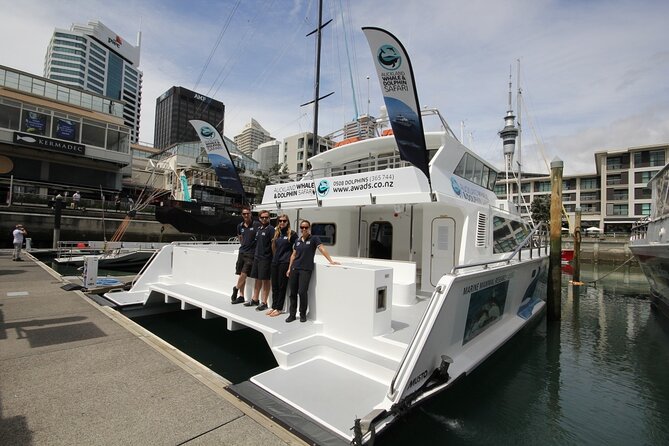
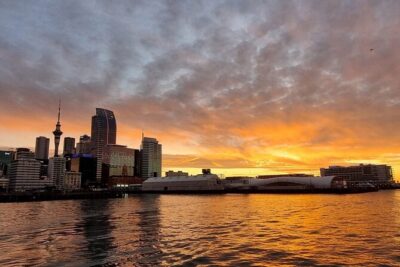
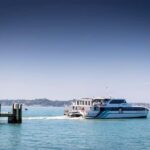
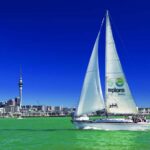
This cruise is built around one core idea: get out on the water fast, then keep searching. You meet at the New Zealand Maritime Museum near Eastern Viaduct in downtown Auckland, then head out from Viaduct Harbour on a custom-built 65-foot (20-meter) catamaran.
The cruise runs about 4.5 hours, and there’s no hotel pickup. That’s a plus if you’re staying in the city anyway—less time in vans, more time looking at water. You’ll also want to plan to arrive early because check-in closes 15 minutes before departure. If you’re late, you may lose your allocated seats.
One more practical note: the tour caps out at 99 travelers. On busy days, that can feel full. The good news is the boat is set up for viewing both inside and out, so you can shift where you stand depending on weather and where wildlife surfaces.
You can also read our reviews of more boat tours in Auckland

Marine research scientists: why the commentary feels worth your time
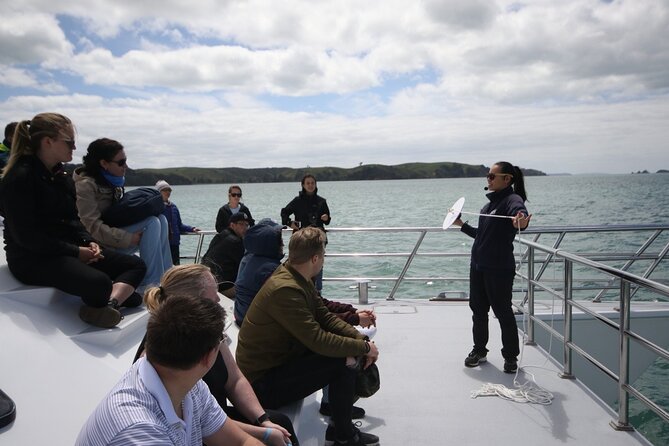
Most whale cruises tell you what you should be looking at. This one adds a layer that I appreciate: marine research scientists are onboard, and your guide talks about local research partnerships and what the crew is tracking.
That matters for two reasons. First, it helps you notice patterns in behavior. When the captain and guides explain what whales or dolphins are doing and where they’re likely to surface, your watching gets sharper. Second, it turns sightings into context. Instead of just snapping a photo and moving on, you understand what that behavior could mean.
You’ll also get education that’s practical for spotting wildlife: where the crew focuses, how seabirds act when sea life is near the surface, and why different whale species have different ways of surfacing. It’s not a lecture; it’s built into the cruise.
And the eco angle isn’t just a slogan. Each ticket purchase contributes directly to marine mammal conservation. That’s one of those small details that makes the whole outing feel more purposeful when you’re out there on the water watching fragile life do its thing.
The wildlife menu: dolphins, Bryde’s whales, seals, and seabirds
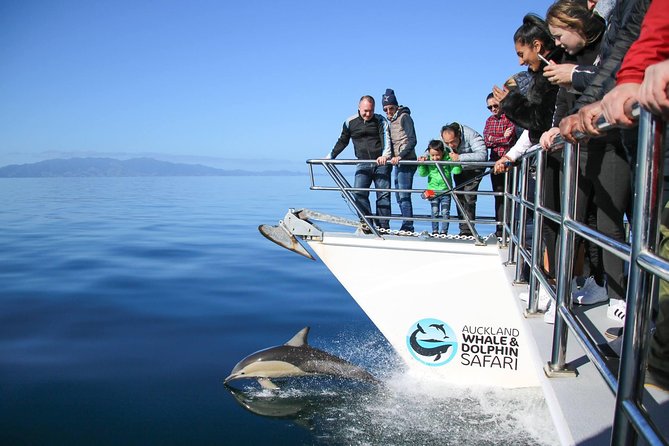
Here’s what you can realistically hope for in this part of Auckland’s marine waters:
Dolphins and whales (the main event)
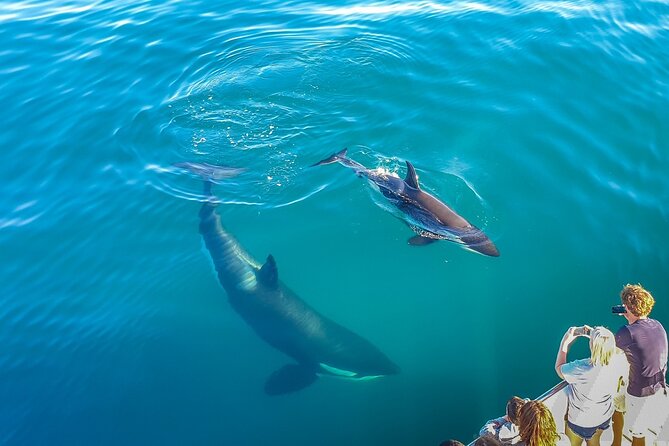
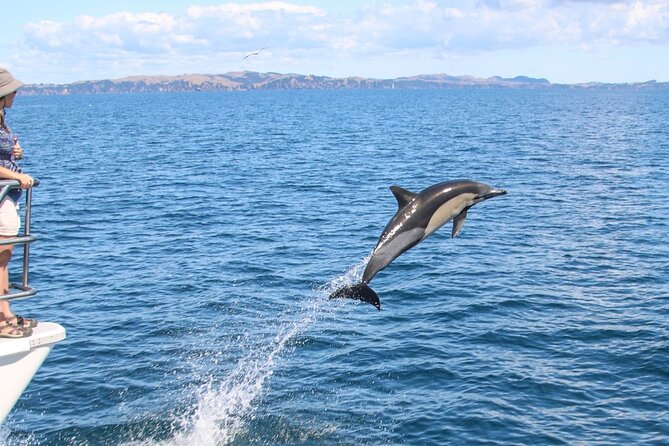
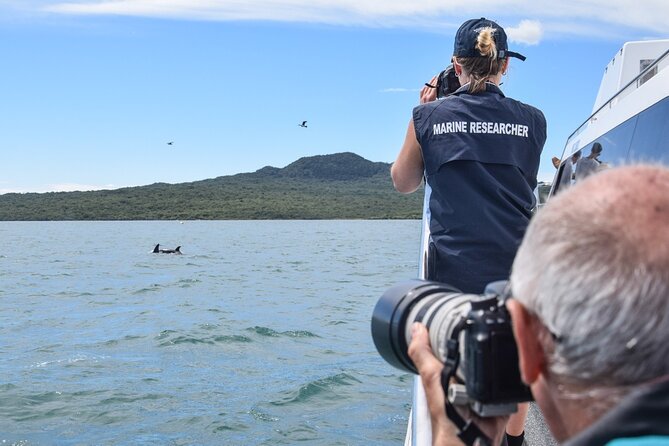
You’re likely to see dolphins. The tour description specifically calls out pods of bottlenose dolphins and Bryde’s whales as species that crew may spot in the area. The boat is arranged so you can scan for multiple whale types—meaning the crew isn’t just hoping for one thing, they’re looking for a range.
If you’re lucky, you’ll also get those close, playful moments where dolphins swim near the boat. Several past outings highlight how strong dolphin sightings can be, including pods that keep showing up for a while.
Seals, penguins, and seabirds
The cruise doesn’t stop at big mammals. You may spot:
- Seals (the crew looks for them as part of the wildlife mix)
- Blue penguins, with the suggestion that you might get a photo opportunity
- Seabirds such as Australasian gannets, petrels, shearwaters, and white-fronted terns
These birds are useful even when mammals are quiet. Seabirds often signal feeding activity, and they add variety when whales are elusive. If you’re the type who gets excited by motion—birds wheeling and diving—this cruise can stay interesting even on slower stretches.

The search is real: how spotting works and why whales can still be elusive
Let’s be honest: you can do everything right and still not see whales. That’s not a flaw in the tour; it’s what happens with wild animals. The tour explicitly notes wildlife viewings can’t be guaranteed, and that dolphins and whales are often swimming around these waters—but not every departure hits them.
What I like here is that the crew’s job isn’t passive. They actively guide you, point out what they’ve found, and help you get your best viewing angles while staying respectful of wildlife.
Also, the captain’s weather skills matter. On days when seas are choppy, you’ll still be out there, but it can affect comfort and photo steadiness. One review note that’s worth taking seriously: if you want the best dolphin action shots, the front deck tends to be the place when the boat is underway. Just make sure you’re comfortable standing up there if the sea has attitude.
The best safety net is the policy: if you don’t see any marine mammals during your trip, you can go again another day at no extra charge. That’s one of the few whale-watching add-ons that actually changes your risk level.
Touring the route through the window: what each stretch is for
You won’t just sit in one spot. The cruise route is designed to take you past a chain of islands and viewpoints around Auckland’s harbors and Hauraki Gulf. Even when animals aren’t visible, the scenery keeps your attention.
Here’s how the segments typically feel:
New Zealand Maritime Museum and Viaduct Harbour (the warm-up)
You start at the Maritime Museum area at Viaduct Harbour, where you meet the crew and get settled on the boat. This is your moment to pick your gear setup—binoculars within reach, camera ready, sunscreen on.
Auckland Harbour Bridge and the volcanic presence of Rangitoto
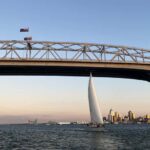
Cruising past the Auckland Harbour Bridge gives you a quick sense of where you are in the city. Then the route turns toward Rangitoto Island, one of the defining shapes in Auckland’s skyline. Even without animals, this stretch is about atmosphere: harbor views, island silhouettes, and that distinct feeling of leaving the city behind.
Waitematā Harbour and into the Hauraki Gulf Marine Park
The Waitematā Harbour section is often calmer visually, like a connector between downtown and open marine space. Then you enter the Hauraki Gulf area, where the story shifts from city sightseeing to wildlife searching in a marine park environment.
The tour describes Hauraki Gulf Marine Park as having five marine preserves and being one of the most biologically diverse marine areas in the world, with about 23 species mentioned. That’s the backbone of why this route matters.
Motuihe Island, Motutapu Island, and Tiritiri Matangi
As you cruise near Motuihe Island and Motutapu Island, you get that protected-island feeling—more wildlife-friendly habitat and more bird activity overhead. Tiritiri Matangi Island is a major conservation landmark in the region, and even from the boat it helps you understand that this isn’t random open water. The whole area is managed for life at sea.
In a best-case scenario, you’ll see seabirds working the air and maybe blue penguins depending on where wildlife surfaces. In any case, these island passes make the trip feel tied to real conservation work, not just chasing moments.
North Head Historic Reserve (the closing act)
Near the end, you pass the North Head Historic Reserve area. It’s a good final look back at the coastline and harbor setting, then the boat returns to Viaduct Harbour, where the tour ends back at the starting point.
Deck choice, photo strategy, and handling a full boat day
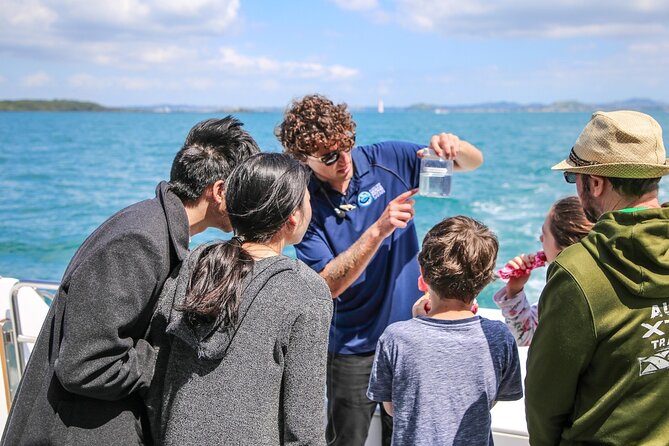
If you want photos, you need a simple plan. This tour can run close to capacity at up to 99 people, so space near the rail can tighten when animals appear.
Here’s what helps:
- Pick your deck based on sea conditions. When waters are calm, the outer deck is where you’ll want to be. One review specifically calls out that the front deck can be the best spot when underway for dolphins.
- Use binoculars early. It’s easier to find birds and then spot mammals once you know what to look for.
- Be willing to rotate. Staff may ask people to share viewing space so others can get a chance at the rail.
- Expect a squeeze at the edge during sightings. When wildlife is close, the action draws everyone to the same small viewing area.
Inside the boat, you’ll still get a window on the scenery and the search effort, plus you can take shelter from wind or rain. One review noted that during busier summer seasons, the boat can feel crowded when everyone moves to the inside at once. So if you’re sensitive to tight spaces, try to stay outside as long as weather allows, then move inside in a calm, controlled way.
Weather, motion, and what to pack for a comfortable cruise
You’re on open water for about 4.5 hours, and Auckland weather can shift fast. The tour advises warm layers and weatherproof gear, and I agree—that’s the difference between enjoying the day and spending it wishing you wore something different.
I’d pack:
- Warm layers and a weatherproof jacket
- A sun hat with chin strap (wind is real out there)
- Sunscreen and sunglasses
- Camera, and binoculars
- Flat-soled shoes that work on a boat deck
Also, remember that even if it’s sunny at the dock, wind on the water cools things down. Bring gear that helps you stay comfortable for long stretches of scanning.
Food and drinks aren’t included, but you can buy them during the cruise. One review also mentions there being a shop onboard with snacks and toilets, which is handy if you need a break during the run.
Price at $135.91: is it good value?
At $135.91 per person for roughly 4.5 hours, you’re paying for three things: access to a specific marine zone, a purpose-built boat experience, and onboard marine research-style interpretation.
Here’s what makes the value feel stronger than a basic whale ride:
- You’re not just looking; you’re learning from marine research scientists.
- The cruise includes a conservation contribution with every ticket.
- The wildlife mix includes more than whales—dolphins, seals, penguins, and seabirds are part of the plan.
- The second-chance policy reduces the risk. If marine mammals don’t show up, you can go again at no extra charge.
What weakens value on paper is also the most important truth: whales can be elusive. If seeing whales is your single top goal, you’ll need to be okay with a “sometimes” outcome. The voucher helps, but it still doesn’t guarantee the exact animal you want on the exact day you booked.
For me, this price makes sense when you care about the whole eco-safari angle—wildlife plus science plus the chance for dolphin-heavy sightings.
Who should book this Auckland dolphin and whale eco-safari
This cruise is a strong fit if you:
- Want a nature-first whale and dolphin outing with real context
- Enjoy marine wildlife and can get excited by birds and penguins too
- Like the idea of learning from scientists, not just a standard script
- Are comfortable with the reality that wildlife sightings vary
It’s also a good option for families who want a short day on the water (about half a day) without dealing with hotel pickup logistics. The meeting point is near public transportation, and service animals are allowed.
Should you book this cruise?
If you’re debating, I’d book it if your priority is dolphins, learning, and the ecosystem around Auckland—not just a guaranteed whale sighting. The onboard research focus and the conservation contribution make it feel more meaningful, and the second-chance option is a real safety net.
Don’t book with whale perfection in mind. Pack for wind and cool air, keep your expectations flexible, and plan to spend most of the cruise scanning and enjoying the hunt. If the sea is friendly, you can get those unforgettable close dolphin moments; if it’s not, you’ll still come away with a better understanding of what’s living in Hauraki Gulf Marine Park.
FAQ
How long is the Auckland Dolphin and Whale Watching eco-safari cruise?
It’s about 4 hours 30 minutes.
Where does the tour depart and where does it end?
It departs from and ends back at Viaduct Harbour in downtown Auckland, with the meeting point at the Eastern Viaduct area.
Is seeing dolphins and whales guaranteed?
No. Wildlife viewings can’t be guaranteed, though dolphins and whales are often in the area.
What animals might I see on this cruise?
You may see dolphins, whales, seals, blue penguins, and seabirds such as Australasian gannets, petrels, shearwaters, and white-fronted terns.
Who provides the commentary onboard?
The tour includes expert commentary from marine research scientists and a local guide.
What boat is used for the cruise?
You board a custom-built 65-foot (20-meter) catamaran.
What should I bring?
Bring warm layers, weatherproof gear, a sun hat (with chin strap), sunscreen, sunglasses, a camera, binoculars, and flat-soled shoes.
Are food and drinks included?
No. Food and drinks are available to purchase.
What happens if I don’t see marine mammals during the trip?
If you don’t see any marine mammals, you can go again another day at no extra charge.
What is the check-in deadline?
Check-in closes 15 minutes prior to departure time.
Can I bring a service animal?
Yes, service animals are allowed.