REVIEW · ALL BLACKS EXPERIENCE
All Blacks Experience: Interactive Guided Cultural Tour
Book on Viator →Operated by All Blacks Experience · Bookable on Viator
This tour is a fast route into New Zealand identity. I like the way it mixes rugby values with Māori culture instead of treating the haka as a quick show-and-tell, and I also like the hands-on bits that keep families moving and learning. One possible drawback: it’s heavy on performance and noise in parts, so if you hate loud rooms, plan for it.
It runs about 1 hour 30 minutes in central Auckland at 88 Federal Street. You’ll get a guided journey, walk through a replica setting, face the haka, and finish with time in Auckland’s biggest official All Blacks retail store. If you’re short on time in the city, this is one of the easiest ways to make it count.
In This Review
- Key points to know before you go
- All Blacks Experience: rugby pride meets Māori performance in Auckland CBD
- Your 90 minutes: changing sheds, the tunnel, and facing the haka
- Step 1: All Blacks Experience guided journey (sport + culture)
- Step 2: Replica changing room energy
- Step 3: Walk the tunnel and face the haka
- A small practical note
- The Step-up hands-on interactive activity (how it boosts learning)
- The guide experience: why the narration matters
- Retail store at the end: official souvenirs without derailing your day
- Group size and timing: why 26 people feels manageable
- Price and value: where $42.82 actually pays off
- Who should book this and who might not love it
- Should you book the All Blacks Experience in Auckland?
- FAQ
- How long is the All Blacks Experience tour?
- Where does the tour start in Auckland?
- How much does it cost?
- What is included in the ticket price?
- Is this tour good for kids?
- Are there any practical tips for bringing items?
- Is there free cancellation?
Key points to know before you go
- Walk the players’ tunnel and face the haka in a purposeful, staged way
- Replica changing sheds help you feel the team energy, not just hear facts
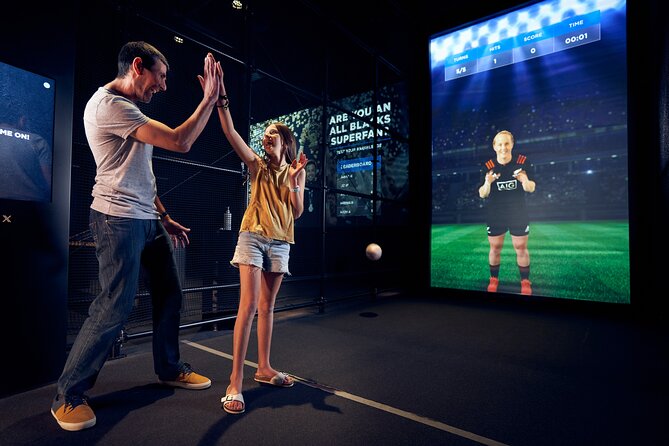
- Hands-on Step-up interactive activity turns rugby knowledge into a game
- Central location in Auckland CBD makes pairing it with Sky Tower easy
- Max group size of 26 keeps the experience from feeling like a human conveyor belt
- Big official retail store at the end means souvenirs are part of the flow
All Blacks Experience: rugby pride meets Māori performance in Auckland CBD
If your idea of Auckland sightseeing is mostly about views and museums, the All Blacks Experience is a smart left turn. It’s still about sport, but it’s also about how a country talks to itself: teamwork, respect, discipline, and cultural pride. And unlike a typical lecture, you’re moving through rooms, trying activities, and ending with a chance to buy official gear.
The setting matters. You’re not watching rugby history from behind a glass case. You walk into a replica changing room vibe, then head toward the tunnel experience. The tour is built so you don’t just learn what the All Blacks stand for—you get a physical sense of it.
This is also a very practical pick for families. It’s interactive enough that kids usually don’t melt into bored silence, and it’s structured enough that adults don’t feel like they’re babysitting a school group.
You can also read our reviews of more guided tours in Auckland

Your 90 minutes: changing sheds, the tunnel, and facing the haka
The experience is designed as one clear journey. Your stop is basically the whole show, but it unfolds in sections so you always know what comes next.
Step 1: All Blacks Experience guided journey (sport + culture)
You start with a guided journey into the spirit of New Zealand’s rugby teams and the cultural roots that shape them. Expect stories that connect the values you hear about in rugby—teamwork, respect, cultural pride—to the Māori performance traditions that influence the haka.
What makes this section valuable is the framing. The tour isn’t only about famous players or match results. It’s about meaning: how identity shows up on a field, and why the haka is more than a dramatic moment.
Step 2: Replica changing room energy
A standout part of the route is the replica changing sheds. You’ll feel the energy of a team space, which helps the rest of the experience land. When you later face the haka, it doesn’t feel like a random stage trick. It feels like the team ritual that leads into competition.
If you’re coming in with no rugby background, this is where you get your footing. You start to understand that rugby culture here includes performance, preparation, and collective identity.
Step 3: Walk the tunnel and face the haka
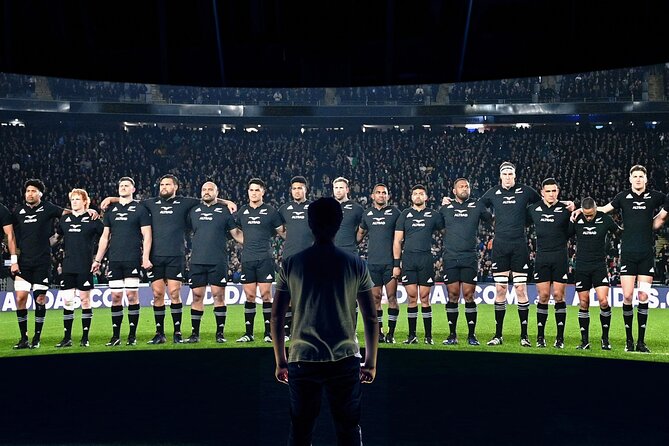
Next you walk down the players’ tunnel. This is the moment most people come for, and it’s handled in a direct, high-impact way: you stand and face the All Blacks and Black Ferns haka.
The tour description emphasizes the emotion of this moment, and from the way guides are praised for delivering the stories, the haka is not treated like background entertainment. It’s presented as a traditional Māori performance symbolizing strength and unity—so you’re meant to take it seriously while still being part of the experience.
You can also read our reviews of more historical tours in Auckland




A small practical note
One review calls out that the last room can be loud. If your group includes anyone sensitive to sound, I’d treat ear protection as a smart move. The good news: the tour provides ear defenders if you need them.
The Step-up hands-on interactive activity (how it boosts learning)
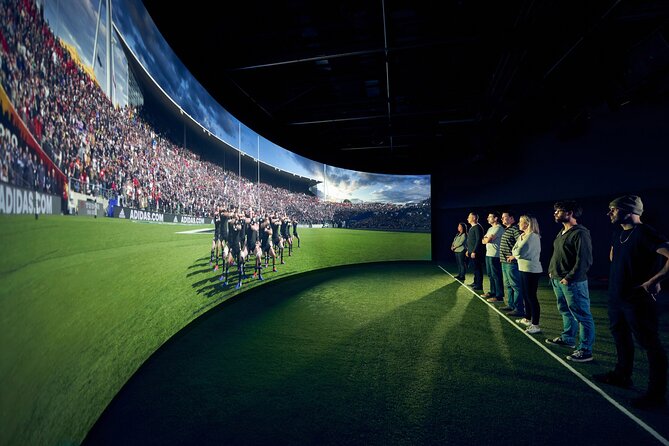
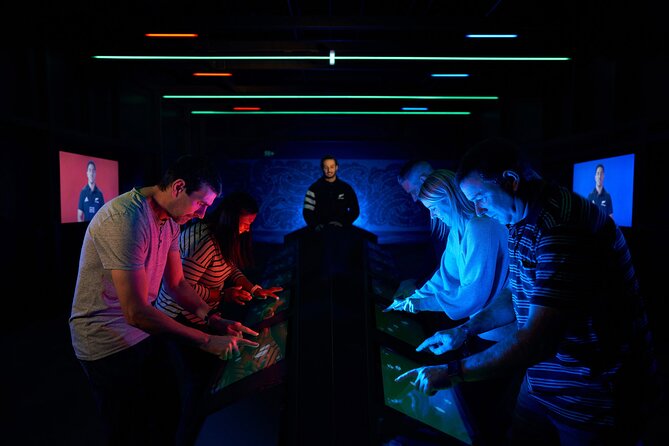
After you’ve built context with the guided sections, you get to test your skills with a hands-on activity called Step-up. This is where the experience gets less lecture-y and more like learning by doing.
Here’s why that matters for value: rugby can be confusing if you’re new. Positions, timing, teamwork, and the feel of the game don’t always translate through storytelling alone. A short interactive challenge helps you understand concepts faster because your body is involved.
It also keeps attention where it should be. A one-hour-and-some change experience risks losing people if it’s only rooms and narration. The tour breaks that up with an activity segment, so you’ll feel the time move instead of sitting through it.
Practical tip: wear comfortable shoes. One review specifically suggests flat shoes so you can participate in the interactive games. Also, if you’re carrying a bag, avoid bringing big luggage in if you can. There are baskets at reception to leave items, which makes the flow easier.
The guide experience: why the narration matters
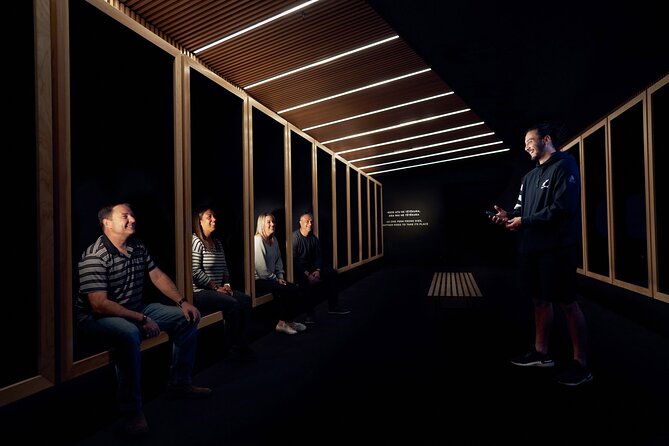
A tour like this lives or dies on the guide. You can have a great set and still end up with a bland script. Here, guides get strong praise for being enthusiastic and covering both rugby history and culture in a way that stays interactive.
Several guide names show up in the experience feedback: Samual, Sam, Ben, Tanya, and Rueben. That tells me the company leans into personality and performance, not just reciting facts. If your guide is in the same style as the ones people mention, you should get a smoother ride through the story—especially on how the haka ties into rugby integrity and modern play.
For you, the practical win is pacing. You’re guided through the experience in the right order, so you’re not left wandering or asking what’s next. For kids, that structure helps. For adults, it prevents the tour from feeling scattered.
Retail store at the end: official souvenirs without derailing your day

The journey ends with a visit to Auckland’s largest official All Blacks retail store. That changes the vibe of the ending in a good way: it’s not a hard stop right after the haka. Instead, you get a low-pressure finale where you can browse at your own pace.
This also improves value. Even if you don’t buy anything, the store gives you a tangible connection to the teams. If you do buy, you’ll likely prefer official merchandise bought in a dedicated store rather than hunting for scattered souvenirs later.
Plan a little time for it. If shopping isn’t your thing, you can still use the store for a quick win—pick up something small and be on your way. Just don’t schedule something immediately afterward that requires you to rush.
Group size and timing: why 26 people feels manageable
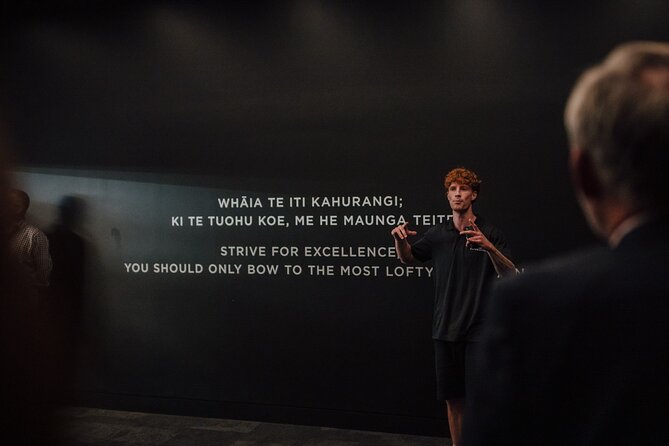
The group maximum is 26 travelers, and that’s an important detail. A smaller group helps the guide keep energy up and allows you to move through rooms without constant shoulder-checking. It also usually means the performance moment feels more personal.
Duration is about 1 hour 30 minutes, and the guidance says to allow 90 minutes. Build in a little buffer, especially if you’re pairing this with another CBD activity. The experience is compact, but you’ll feel rushed if you plan a tight schedule.
Mobile ticket is included, which is convenient. In a busy Auckland day, anything that cuts down on paperwork is worth it.
Price and value: where $42.82 actually pays off
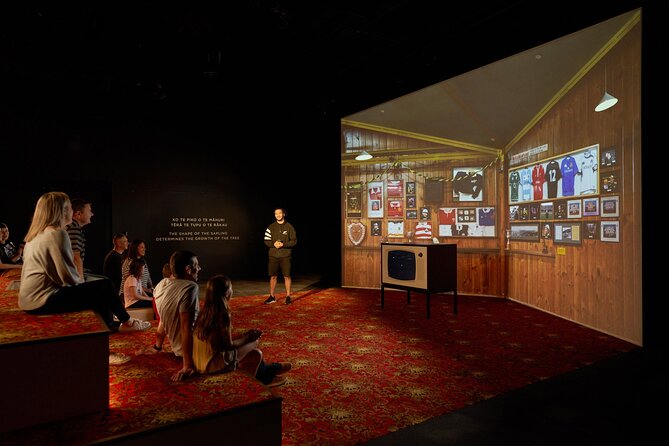
At $42.82 per person, this isn’t a bargain-basement activity. But it’s also not priced like a single-room show, because your ticket covers a full guided experience plus interactive time and the official retail stop.
Where the money goes:
- Guided storytelling connecting rugby and Māori cultural values
- Replica changing shed and tunnel moments that create atmosphere
- The haka-facing experience, which is the centerpiece
- Hands-on Step-up interactive activity, so learning sticks
- A visit to a major official store at the end
If you’re a rugby fan, you’re basically paying for a structured cultural encounter in one block of time. If you’re not a rugby fan, you’re paying for a cultural lesson delivered through performance and play—not just facts.
For families, the value improves because kids can participate in interactive moments. For couples, it’s a solid shared experience with emotional impact.
The key thing: treat it as a cultural tour first and a rugby experience second. You’ll get more out of it.
Who should book this and who might not love it
This is best for:
- Rugby fans who want more than match stats
- Families with kids who do better with interactive, structured activities
- Visitors who want Kiwi culture and a meaningful haka moment in a guided setting
- People who like tours that feel like an event, not a slideshow
You might hesitate if:
- You dislike loud rooms or strong stage-style performance
- You only want casual sightseeing with minimal narration
- You prefer content that’s purely historical or purely sporting with no cultural performance component
One review notes it may not feel as compelling for an everyday Kiwi rugby follower. That makes sense: the tour is designed to explain meaning from the outside in. If you already know all the rugby and you don’t care about the cultural framing, the big value shifts away.
Should you book the All Blacks Experience in Auckland?
I think you should book it if you want a high-impact Auckland stop that combines sport with Māori culture in a way that’s built for real engagement. The center-city location helps. The 90-minute format helps. And the mix of guided story, replica atmosphere, the tunnel haka moment, plus the Step-up interactive activity makes it feel complete instead of half-finished.
If you can tolerate a loud room and you’re open to cultural performance being the heart of the experience, this is a strong use of time. For me, the best sign is that guides are praised for knowledge and for keeping it interactive, not for reading a script at you.
FAQ
How long is the All Blacks Experience tour?
It runs for about 1 hour 30 minutes, and you should allow 90 minutes.
Where does the tour start in Auckland?
The meeting point is 88 Federal Street, Auckland Central, Auckland 1010, New Zealand. The tour ends back at the meeting point.
How much does it cost?
The price is $42.82 per person.
What is included in the ticket price?
The ticket includes a guided journey focused on Māori culture and the spirit of the All Blacks and Black Ferns, replica changing sheds, walking down the tunnel to face the haka, a hands-on Step-up interactive activity, and a visit to Auckland’s largest official All Blacks retail store.
Is this tour good for kids?
It’s described as ideal for adults and kids alike, with interactive elements designed to get people involved.
Are there any practical tips for bringing items?
The guidance from reviews suggests avoiding taking bags, and using the baskets at reception to leave items.
Is there free cancellation?
Yes. You can cancel for a full refund up to 24 hours before the experience starts.