REVIEW · MāORI CULTURAL TOURS
AKL: Te Puia Maori Haka, Kiwi Birds, Redwood & Blue Springs
Book on GetYourGuide →Operated by ENZOY Tours · Bookable on GetYourGuide
A long day, packed with real Rotorua magic. This trip strings together geothermal drama at Te Puia, a guided Māori cultural performance, and a calm, turquoise breather at Blue Spring.
I especially love the up-close geology, with Pōhutu Geyser and the bubbling mud pools, plus the Kiwi Conservation Centre where you get to see New Zealand’s national bird. It’s a smart mix of power and gentleness—steam and song, then cool water and shade.
One possible drawback: it’s a 12-hour loop with an early start, and the walking isn’t ideal if you have back issues or mobility challenges. Bring comfy shoes, pace yourself, and don’t plan anything strenuous right after.
In This Review
- Key points at a glance
- Auckland to Rotorua: the early pickup and scenic Waikato drive
- Tirau break: corrugated iron fun and a quick coffee reset
- Te Puia geothermal park: Pōhutu Geyser, mud pools, and real guided flow
- Kiwi Conservation Centre: the calm moment after all that steam
- Māori Arts & Crafts Institute and Te Aronui a Rua: pōhiri to haka
- Rotorua’s Redwood Forest: a free walk with big-tree photos
- Putāruru Blue Spring (Te Waihou Walkway): turquoise water at about 11°C
- Pacing, comfort, and what to pack for a 12-hour day
- Price and value at about $226: what’s included in the cost
- Picking the right guide: MANAKI vs Sid and why it matters
- Should you book this Rotorua day trip from Auckland?
- FAQ
- What time does pickup happen from Auckland CBD and Auckland Airport hotels?
- How long is the full day trip?
- What happens at Te Puia during the guided experience?
- Do I get to see the Māori cultural performance?
- Is lunch included?
- How long is the guided geothermal portion?
- Is there free time at the Redwood Forest and Blue Spring?
- Can I cancel for a refund, and is pay later available?
- Is this tour wheelchair accessible?
Key points at a glance
- Early hotel pickup in Auckland: plan for a 5:45–6:00 AM CBD pickup or 6:15–6:30 AM Airport pickup.
- Te Puia, guided with a clear focus: you’ll get a structured geothermal experience, including geysers and mud pools.
- Māori performance at Te Aronui a Rua: expect pōhiri, waiata, mōteatea, poi dance, and the haka.
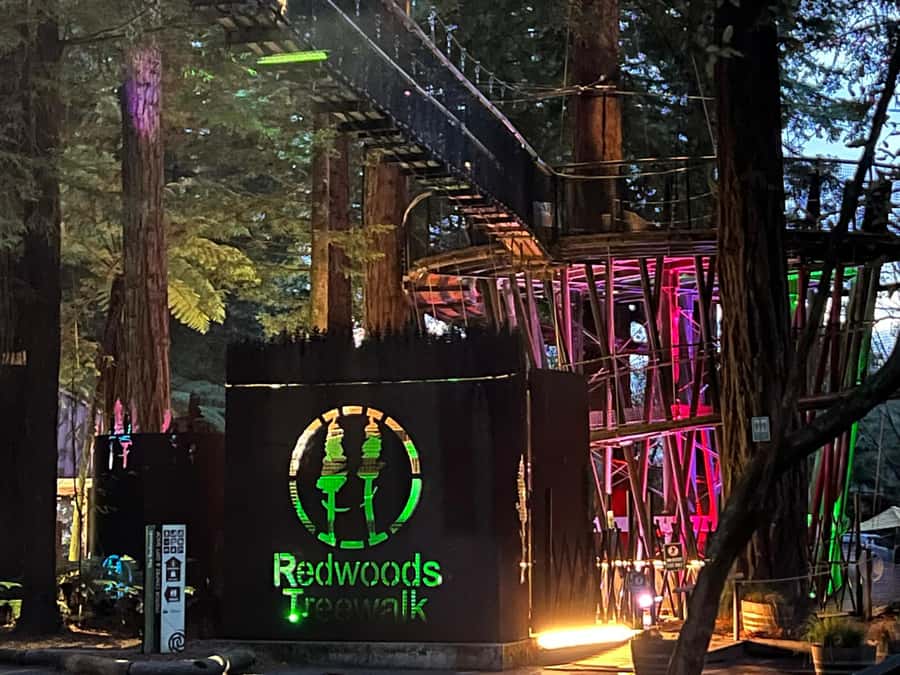
- Rotorua’s Redwood Forest on free time: a no-rush stroll with easy photo stops under towering trees.
- Putāruru Blue Spring (Te Waihou Walkway): crystal-clear water that stays around 11°C year-round.
- Guide quality can change your feel of the day: one guide named MANAKI stood out for detailed, humorous storytelling; another guide named Sid leaned more on prerecorded audio.
Auckland to Rotorua: the early pickup and scenic Waikato drive
This is the kind of Rotorua day trip that starts early, for good reason. You’re picked up from Auckland CBD (around 5:45–6:00 AM) or Auckland Airport hotels (around 6:15–6:30 AM), then you settle into a bus ride through the Waikato countryside.
The advantage of leaving early is timing. You reach Rotorua with enough day left to do Te Puia properly, catch the cultural program without rushing, and still get to the calmer nature moments later.
If you’re prone to morning grogginess, plan like a local: water before you board, and something warm for the bus. The day may look sunny from the window, but geothermal areas can feel cooler and misty.
You can also read our reviews of more tours and experiences in Auckland.

Tirau break: corrugated iron fun and a quick coffee reset
On the way, you stop in Tirau for about 15 minutes. It’s known for quirky corrugated iron sculptures and oddball dog- and sheep-shaped buildings, so it’s a quick “stretch and smile” stop rather than a long sightseeing detour.
This is useful because you’re coming off a very early wake-up. Grab coffee if you want it, use the bathroom before Rotorua, and take a few photos with the odd sculptures while you can still move easily.
It’s short enough that you won’t feel like you’re losing the day. It’s long enough that you’ll feel human again.
Te Puia geothermal park: Pōhutu Geyser, mud pools, and real guided flow

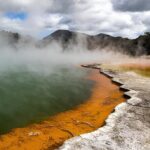
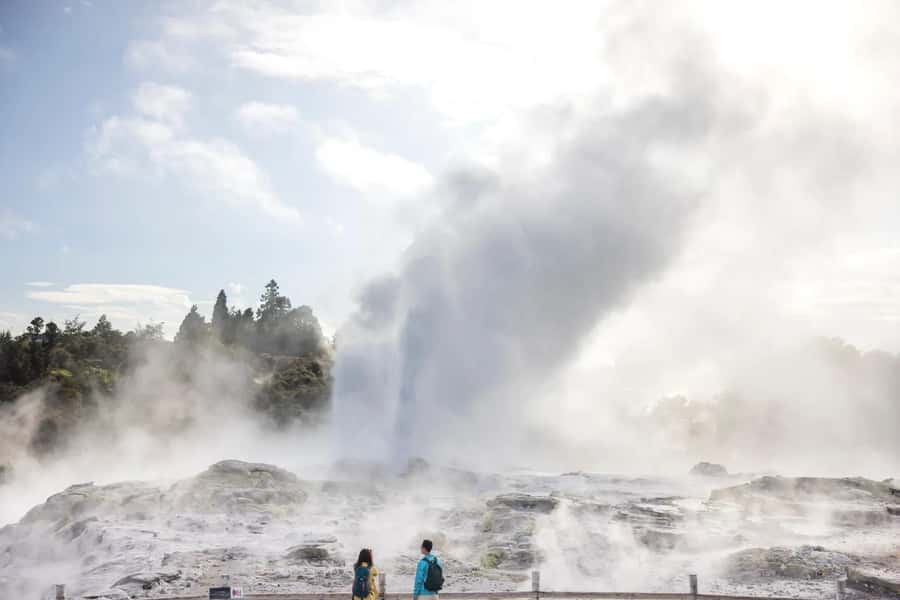
Te Puia is the heart of the trip. Rotorua’s geothermal park and cultural centre has that unmistakable New Zealand mix: dramatic steam, earthy colours, and constant reminders that this landscape is still “working.”
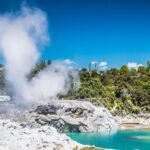
Your time here includes a guided geothermal experience focused on the major sights. You’ll see the Pōhutu Geyser, along with bubbling mud pools and active vents. Even if you’ve seen geothermal photos before, the scale and smell are different in person.
What I like about this setup is the structure. The guided portion helps you connect what you’re seeing—why you get steam here, why the ground looks slick or cratered there, and why the area feels both powerful and oddly theatrical. Since the program at Te Puia is guided, you’re not left trying to figure it all out on your own.
Plan for changing conditions. Some spots feel warmer near active vents, while shaded paths feel cooler. Wear shoes that can handle a bit of uneven ground and damp surfaces.
Kiwi Conservation Centre: the calm moment after all that steam
After the geothermal spectacle, you head to the Kiwi Conservation Centre at Te Puia. This is one of the best “contrast” breaks on the day—everything shifts from steam and heat to something quieter and more focused.
You get to see New Zealand’s national bird up close, and that matters because kiwis are easy to miss elsewhere. This stop gives your day more than scenery; it adds a conservation connection that feels meaningful without turning the outing into a lecture.
If you’re into wildlife, this is also where your attention naturally slows. You’ll want a steady moment for observation and photos, especially if you’re used to fast-paced sightseeing.
Māori Arts & Crafts Institute and Te Aronui a Rua: pōhiri to haka
Te Puia isn’t just geothermal. It also brings Māori culture to the centre of the experience, and the performance portion is a highlight.
You’ll visit the Māori Arts & Crafts Institute, where traditional carving and weaving skills are shown by skilled makers. It’s a good stop if you like seeing crafts explained in a way that ties technique to ancestry.
Then comes the cultural performance in the carved meeting house Te Aronui a Rua. The program includes a traditional pōhiri (welcome), waiata (song), mōteatea (chant), poi dance, and the stirring haka.
One practical tip: arrive about 15 minutes early for the performance. That buffer helps you settle in comfortably instead of arriving while others are already preparing. Lunch is available at Te Puia, but it’s your own cost—so if you want food before the performance, factor that into your timing.
If you care about getting the meaning behind what you see, this is the best part of the day to pay close attention. The day moves fast later, but the cultural program gives you a chance to connect with people, not just places.

Rotorua’s Redwood Forest: a free walk with big-tree photos
After Te Puia, the day shifts gears again with a Rotorua highlights drive and a stop for the Redwood Forest walk. You’ll have free time to stroll among tall redwoods and take photos.
This is described as a free walk, which is great if you want movement without a “standing-only” tour structure. You can go slowly, stop often, and enjoy the feel of trees overhead and the softer light under the canopy.
This portion is also a mental reset. Geothermal attractions can be intense—smell, steam, heat. The redwoods offer a cooler, calmer pace where the day feels less loud.
If you’re bringing a camera, this is where you’ll want it. The “vertical” view under big trees usually works better than the wider shots people take at the start of the day.
Putāruru Blue Spring (Te Waihou Walkway): turquoise water at about 11°C
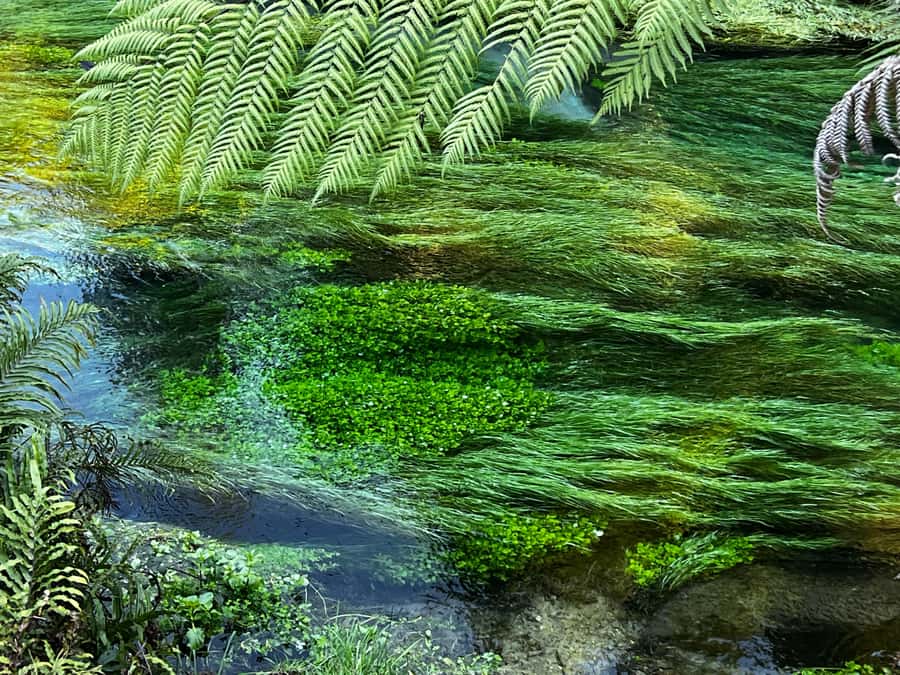
The last “wow” moment is Putāruru Blue Spring, also known through the Te Waihou Walkway. The water is famously crystal-clear and turquoise, with the important detail that it’s filtered through underground rock for up to 100 years.
There’s a reason it feels so striking: the water stays around 11°C year-round. Even in warmer months, you’ll notice it looks cool, clean, and almost unreal next to bush and farmland.
The walk is short and scenic, following the Waihou River. You’ll see a serene mix of bush, farmland, and wetlands—an easy place to slow down and just look.
This is also a smart choice for comfort at the end of a long day. You’re not doing a grueling hike. It’s more about atmosphere and photos than exertion.
If you’re sensitive to cold, even just for legs and hands, dress a touch warmer than you think you need. The spring can feel cooler than expected.
Pacing, comfort, and what to pack for a 12-hour day
This tour is listed as 12 hours door-to-door from Auckland. That’s a full day, even with planned stops, so treat it like a day trip that will earn dinner later.
Wear comfortable shoes you don’t mind getting a little dirty, plus sunscreen and a hat. A water bottle is a must, because geothermal parks and daytime walking can add up.
For weather, New Zealand can change the rules quickly, especially in geothermal areas. Bring a layer you can add or remove during the day.
One important note on comfort: the tour is marked wheelchair accessible in the overview, but it’s also listed as not suitable for wheelchair users. If that matters to you, you’ll want to confirm details with the operator before booking, especially for walking portions at Te Puia and the spring area.
People with back problems should also take the walking component seriously. Even if you’re not doing long hikes, a full day of uneven ground and short walks adds up.
Also, smoking isn’t allowed, so plan for that if you’re a smoker.
Price and value at about $226: what’s included in the cost
At around $226 per person, the value comes from how much is bundled into a single day. You get hotel pickup and drop-off, round-trip bus transportation, entry and guided time at Te Puia, the Māori cultural performance, and a visit to the Kiwi Conservation Centre.
That’s key: you’re paying for convenience and for “pre-wired” time with a guide. Rotorua can be done independently, but then you’re coordinating your own tickets, schedules, and logistics across multiple stops. This format removes most of that stress.
What’s not included is also clear: coffee and lunch are on your own. The good news is you’re not paying extra for every stop. You just budget a meal and a few drinks as you go.
I think this is strongest value if you’re short on time in New Zealand’s North Island, or you don’t want to drive in Rotorua’s traffic and parking. It’s also a solid choice if you want both culture and nature in one day and you’re okay with a full schedule.
Picking the right guide: MANAKI vs Sid and why it matters
The core itinerary has fixed sights, but your experience can still feel different depending on how the guide tells the story and how much energy they bring.
In the guide names shared from past outings, MANAKI is specifically described as excellent, with detailed explanations delivered with respect and good humor. That kind of guidance can make the geothermal science and Māori performance context feel more alive.
On the other hand, Sid is mentioned as friendly, but in one case he relied more on prerecorded audio for history and points of interest. The highlights were still there, but the social tone was less personal.
So here’s my advice: if you care about interpretation, arrive early, pay attention during the guided parts, and be ready with questions. If the guide is more “audio-supported,” you’ll still get the visuals and performances, but you’ll want to actively listen and ask clarifying questions when you can.
Either way, you’re choosing a tour that gives you the essentials: Pōhutu Geyser, kiwi, Māori performance, redwoods, and Blue Spring, all without you juggling transport.
Should you book this Rotorua day trip from Auckland?
I’d book this if you want a focused Rotorua day with minimal planning: Te Puia geothermal sights, a Māori program in a carved meeting house, a kiwi stop, plus the redwoods and Blue Spring.
Skip it—or at least double-check fit—if you’re dealing with back issues or you need a slower, more flexible walking schedule. Also consider whether the early start works with your travel rhythm.
If you do book, set your expectations: you’ll be moving all day, and lunch is on your own. But if you want one trip that hits geology, culture, birds, and clear water, this is a very efficient way to do it.
FAQ
What time does pickup happen from Auckland CBD and Auckland Airport hotels?
Pickup from Auckland CBD is typically 5:45–6:00 AM, and from Auckland Airport hotels it’s typically 6:15–6:30 AM.
How long is the full day trip?
The total duration is listed as 12 hours.
What happens at Te Puia during the guided experience?
You’ll visit Te Puia Rotorua Geothermal Park with a guided geothermal tour that includes sights like the Pōhutu Geyser area, mud pools, and vents, plus the Kiwi Conservation Centre.
Do I get to see the Māori cultural performance?
Yes. You’ll attend a cultural performance in Te Aronui a Rua, which includes pōhiri, waiata, mōteatea, poi dance, and the haka.
Is lunch included?
Lunch isn’t included. You can eat at Te Puia café or restaurant at your own cost.
How long is the guided geothermal portion?
The guided geothermal experiences are described as lasting 90 minutes.
Is there free time at the Redwood Forest and Blue Spring?
Yes. You get a free walk/photo time in the Redwood Forest, and you also stop at Putāruru Blue Spring (Te Waihou Walkway) for photos and a visit.
Can I cancel for a refund, and is pay later available?
Free cancellation is available up to 24 hours in advance for a full refund. You can also reserve now and pay later.
Is this tour wheelchair accessible?
It’s marked as wheelchair accessible, but it also lists that wheelchair users aren’t suitable. If this applies to you, confirm the specifics with the operator before booking.