REVIEW · AUCKLAND
Full-Day Grand Auckland Volcanoes Tour
Book on Viator →Operated by Voltours Limited · Bookable on Viator
Auckland’s volcanoes explain everything fast. This full-day tour connects the city to its volcanic past with crater walks, harbour outlooks, and lava-strewn coastline. You’ll cover a lot of ground by minivan, then earn those views with real walking.
What I like most is how the day stays practical and scenic: from Achilles Point to Mt Eden, you keep seeing Auckland’s volcanic shapes from different angles. I also love that your guide, Mike from Voltours, ties the geology to Māori settlement history in a way that makes the terrain feel personal, not just technical.
One thing to plan for: it’s not a sit-and-glide day. There are ups and downs around multiple craters (and even an optional steep crater entry), plus some spots ask for steady footing. Wear proper shoes and don’t schedule this right after a flight or a long walking day.
In This Review
- Key highlights worth booking for
- Why Auckland’s volcanoes are the best way to understand the city
- Achilles Point: Hauraki Gulf islands and first volcanic clues
- Mt Wellington and Mangere Mountain craters: the walking part that pays off
- Mt Wellington (crater near the peak)
- Mangere Mountain (crater walk and more settlement context)
- One Tree Hill and Mt Eden: summit views that make the whole map click
- One Tree Hill (Maungakiekie) and Cornwall Park driving views
- Maungawhau / Mount Eden crater walk
- Auckland City lunch stop: time to refuel without losing the rhythm
- Lake Pupuke and Takapuna Beach: freshwater crater and lava coast near the water
- Lake Pupuke
- Takapuna Beach lava flows and volcanic features
- North Head Historic Reserve and Devonport: a volcano turned military site
- North Head Historic Reserve
- Devonport and the option of Mt Victoria
- What to expect on the ground: walking level, timing, and comfort
- Price and value: is $179.97 a good deal?
- Who should book, and who might want a lighter day
- Should you book the Full-Day Grand Auckland Volcanoes Tour?
- FAQ
- How long is the full-day tour?
- What time does the tour start?
- Where do I meet the group?
- Is port pickup included for cruise passengers?
- Is lunch included, or do I buy my own food?
- How much walking is involved?
- Does the tour run in bad weather?
- Will I get to return to my hotel, or do I have to take a ferry?
- Can I cancel and get a refund?
- What’s the group size?
Key highlights worth booking for
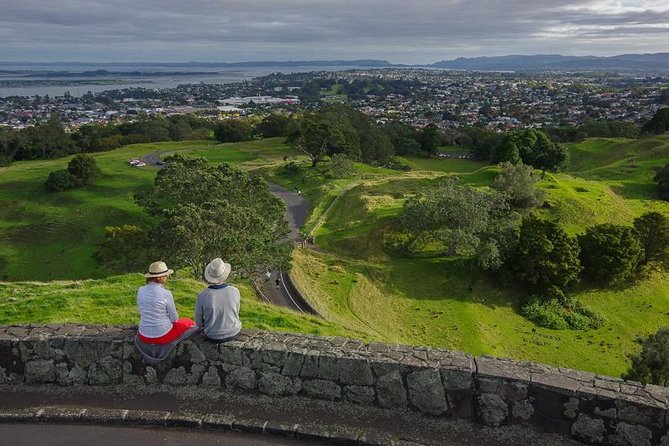
- Crater-top views like Mt Eden, where the city and surrounding volcanic field read like a map
- Harbour geology at multiple stops, including outlooks over the Hauraki Gulf islands
- Real volcano walking, including circular crater paths on Mt Wellington and Mangere Mountain
- Lava coast at Takapuna, with features tied to old lava flows near the beach
- North Head Historic Reserve, where a British military fortress is built into volcanic terrain
- Small group size (max 11), which helps you move faster and ask questions
Why Auckland’s volcanoes are the best way to understand the city
Auckland is often sold as a waterfront-and-coffee kind of place. This tour flips that script. Instead of starting with beaches and suburbs, it starts with why the land looks the way it does. The Auckland region sits on a chain of volcanic activity, and once you start reading craters, domes, lava flows, and lookout ridges, the city makes sense.
You get panoramic harbour views repeatedly, but they’re not just pretty postcards. Each view is paired with a reason: how the volcanic landforms shaped where people settled, what the coastline became, and why islands like Rangitoto stand where they do.
And because the tour is run in a minivan with frequent short walks, you get the payoff without trying to coordinate multiple hikes and driving routes on your own.
You can also read our reviews of more tours and experiences in Auckland

Achilles Point: Hauraki Gulf islands and first volcanic clues
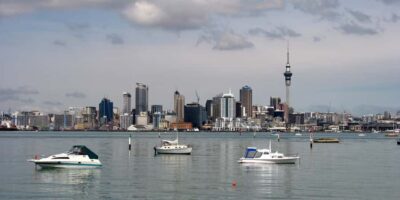
Your day begins at Achilles Point, a classic spot for looking out over the Hauraki Gulf. This is where Rangitoto and Motukorea show up in a big, dramatic way, and your guide helps you connect what you’re seeing to volcanic formation and later human arrival patterns.
It’s also a quick warm-up: the stop is about 15 minutes, so you’re not out for long before you get the payoff of big horizon views. You’ll also get city glimpses, which helps later when you compare city views from the crater summits.
Drawback to note: it’s a harbour outlook, so wind can be a factor. Bring a layer you don’t mind getting damp, because the tour operates in all weather.
Mt Wellington and Mangere Mountain craters: the walking part that pays off
After your harbour warm-up, the tour moves into “put your feet where the story is” territory.
Mt Wellington (crater near the peak)
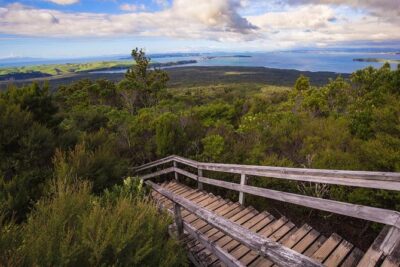
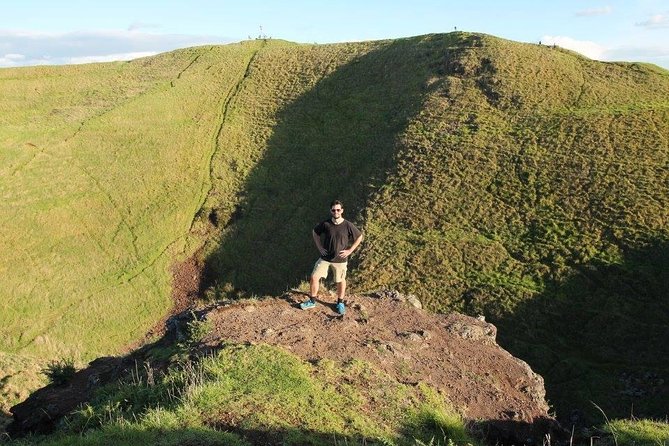
At Mt Wellington, you walk to a crater near the top of a volcano described as about 10,000 years old. The path gives you a sense of scale, and you’ll get an intro to the Auckland Volcanic Field—basically, the idea that Auckland isn’t just one volcano. It’s a whole region shaped by repeated volcanic events.
There’s an optional chance to enter the steep-sided crater. You don’t have to do it, but if you’re comfortable with short, steep terrain, it’s one of those moments where the volcanic process stops being abstract.
Time-wise, plan on around 45 minutes here, which includes the walk and the guided interpretation.
Mangere Mountain (crater walk and more settlement context)
Next is Mangere Mountain, another crater area with walking around the volcanic features. You’re taught how the volcano relates to Māori settlement on and around these volcanic landforms. You’ll also see views toward Manukau Harbour, which gives you a different angle on Auckland’s “two harbours, one city” feel.
This stop is also about 45 minutes. The terrain is uneven in places, so steady shoes matter more than fashion.
Why this pair matters: Mt Wellington and Mangere Mountain show you that Auckland’s volcanic past is not only visible from viewpoints. It’s physically present under your feet, in the shape of the ground you’re tracing.



One Tree Hill and Mt Eden: summit views that make the whole map click
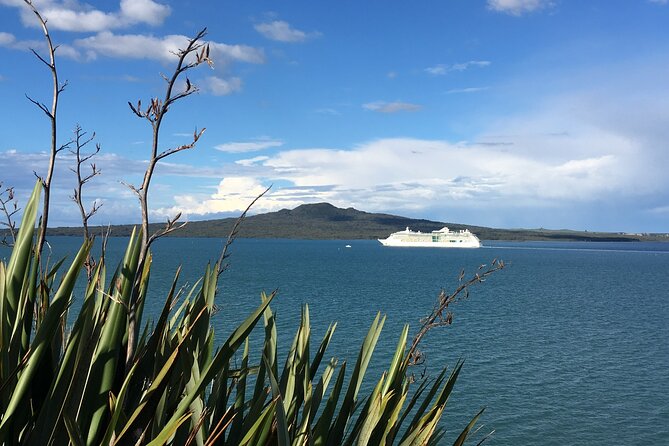
By mid-morning you start getting repeated “oh, that’s why the city is laid out like this” moments.
One Tree Hill (Maungakiekie) and Cornwall Park driving views
At One Tree Hill, you’ll get a guided summary of New Zealand history with a focus on early interaction between British settlers and Māori. Then you drive around Cornwall Park, with additional volcanic craters visible from the road and nearby viewpoints.
This stop runs about 30 minutes. It’s a good balance: a short walk, then city-and-volcano context that keeps the story moving.
Maungawhau / Mount Eden crater walk
Mount Eden is one of Auckland’s iconic crater walks, and this tour treats it as more than a photo stop. You walk around the crater and then enjoy the summit views over the city and surrounding volcanoes.
Expect around 45 minutes. This is the stop where the day’s theme really locks in: the “volcano field” idea becomes obvious because you can pick out landforms and relate them to where you are.
Practical note: crater edges can be exposed. Even on clear days, bring sunscreen and a wind layer. On grey days, bring something that won’t make you regret wearing it.
Auckland City lunch stop: time to refuel without losing the rhythm
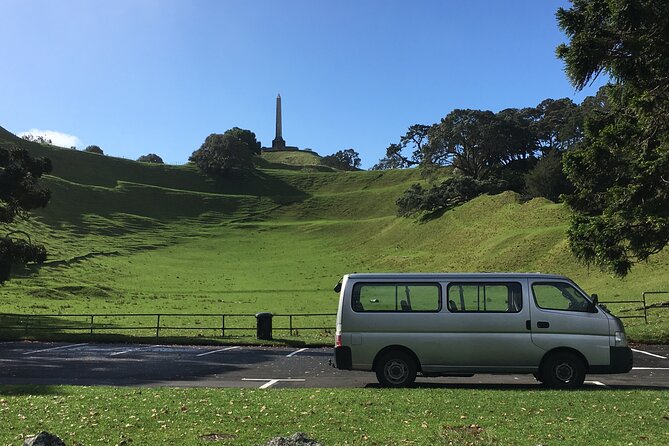
Lunch is your one break from the volcano circuit. The tour stops in central Auckland for about an hour, and you pick your own lunch location.
Food and drinks aren’t included on the tour, so this is your chance to eat properly before the afternoon walking and coast exploration. I like that this lunch window is long enough to choose somewhere you actually want, instead of being pushed into a pre-selected meal.
If you’re traveling with limited time or you’re picky, you can still keep it simple: grab a quick sit-down meal close to the central area, eat, and meet back on time. The tour keeps a steady pace, and waiting around is not the vibe.
Lake Pupuke and Takapuna Beach: freshwater crater and lava coast near the water
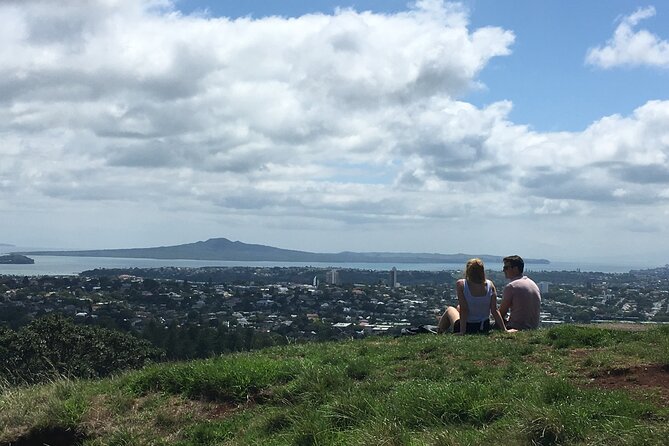
The afternoon keeps the geology going, but in a way that feels more “Auckland proper” than pure hiking.
Lake Pupuke
Lake Pupuke is described as a huge volcanic explosion crater that’s now filled with fresh water. The stop is short—about 15 minutes—so it’s more about seeing the form and absorbing the meaning than doing a long walk.
Still, it’s a great contrast to the earlier crater experience. Instead of “dry crater underfoot,” you get water sitting inside the volcanic story.
Takapuna Beach lava flows and volcanic features
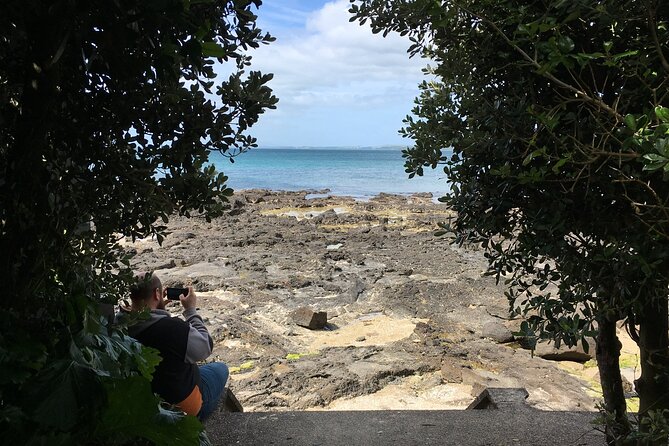
Then you head to Takapuna Beach, where old lava flows and a variety of volcanic features show up along the coastline. The tour mentions features like tree moulds and lava tubes, plus other volcanic structures.
The stop is about 45 minutes. There’s also an optional walk along the beach area, which is where the coast starts to feel like a geology museum you can walk through. One extra tip from experience with this kind of coast: if tides matter for where you can safely see and step, check local conditions before you head down any rockier stretches.
Why it works: Takapuna gives you visual variety. After crater hills, you get flat-ish coastline walking and a different type of evidence—shapes and textures created by lava, not just by crater formation.
North Head Historic Reserve and Devonport: a volcano turned military site
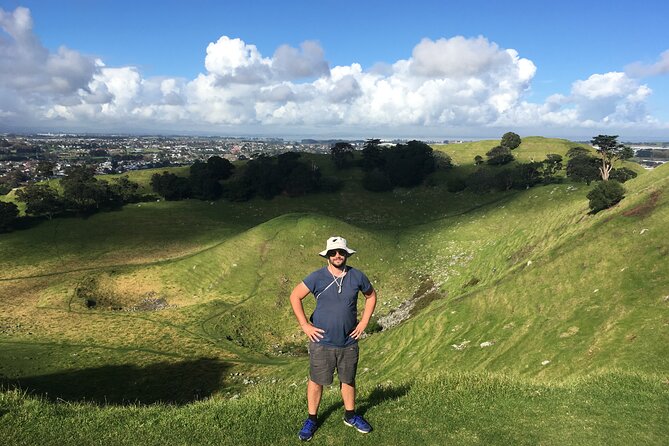
If you thought this day was all about science, North Head adds an important human layer.
North Head Historic Reserve
At North Head, you explore tunnels and see guns at a British military fortress built into volcanic terrain. You’ll do an easy walk around the periphery of the volcano, with harbour and city views.
Plan on about 45 minutes. This stop makes a strong point: volcanic landforms weren’t just scenery. They became practical spaces for people—defense positions, fortifications, and movement through the terrain.
Also, because it’s a historic site, it tends to feel less like hiking and more like walking with meaning.
Devonport and the option of Mt Victoria
From there, you’ll see the main town of Devonport, known for its historic houses. There’s also an optional walk up to Mt Victoria for amazing city views.
At the end of the day, you’re driven back across the Auckland Harbour Bridge to your hotel. There’s also an option to stay in Devonport and take the ferry back to the city.
This is where the tour gives you flexibility. If your legs are done, you can go straight back by car. If you want a view from the water, the ferry option adds variety.
What to expect on the ground: walking level, timing, and comfort
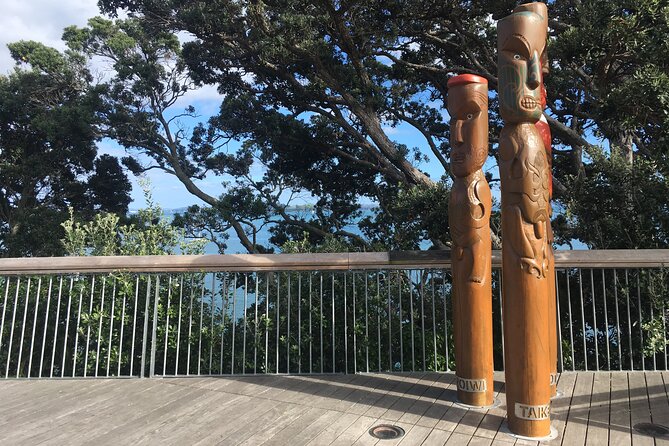
This tour is built on a simple formula: minivan to the next volcanic area, then a short to medium walk to understand it up close. The total duration is about 10 hours, starting at 8:00 am.
You should have moderate physical fitness. Even though many stops are around 15–45 minutes, the walking includes uphill sections and crater-edge paths. Some areas have uneven footing, so balance helps.
On comfort: the group is capped at 11 travelers, which keeps it manageable, but a small vehicle can still feel tight when it’s full. If you’re tall or you dislike cramped seating, bring a little patience and plan to stretch when you stop.
On weather: the tour operates in all weather conditions, and you should dress appropriately. That means it’s worth packing like you’ll get sun, wind, and sudden rain. A light rain layer and closed-toe shoes are your best friends.
One more practical note from real-world experience: the guide often keeps things photo-friendly, and the pace is thoughtful about effort level. If a steep section looks questionable, you can usually choose a safer viewpoint instead of forcing the climb.
Price and value: is $179.97 a good deal?
At $179.97 per person for roughly 10 hours, this tour isn’t a cheap impulse buy. But it also isn’t overpriced for what you get.
Here’s why it can be good value:
- You’re paying for transport across multiple volcanic sites that would be a hassle to string together yourself.
- You’re paying for a guided story that connects geology to Māori settlement and colonial-era history—so you’re not just looking at craters, you’re learning how to interpret them.
- The group size is small (max 11), so the day feels more personal than the big-van circuit tours.
Also, if you’re on a cruise, the port pickup/drop-off matters. That removes a big headache: figuring out transit timing in a city where traffic can shift your plans fast.
Where you might feel the cost: because food and drinks aren’t included, you’ll spend on lunch and any snacks. If you’re on a tight food budget, plan what you’ll do in central Auckland ahead of time.
My bottom line: the price starts to make sense if you want the day organized, guided, and packed with multiple volcanic viewpoints, not a DIY drive with scattered stops.
Who should book, and who might want a lighter day
This tour is a great fit if you want:
- A fast way to understand Auckland using real terrain, not just viewpoints
- A mix of natural history, Māori context, and colonial-era layers
- A day that includes walking, but with breaks and short guided stops
It may be less ideal if:
- You have limited mobility or hate steep, uneven paths
- You want a low-effort sightseeing day with minimal walking
- You’re sensitive to being in a small vehicle with limited legroom
If you prefer a gentler experience, there’s also a half-day option mentioned by customers, but for the full story and the full variety—craters, coast lava, tunnels, and Devonport—the full-day format is the one that truly strings everything together.
Should you book the Full-Day Grand Auckland Volcanoes Tour?
If you like the idea of seeing Auckland as a living geology lesson, I think you’ll enjoy this. The big win is the combination: multiple volcanic sites across different types of terrain, each paired with human stories that make the land feel relevant.
Book it if you’re comfortable with a full day of walking and you want a guide to help you read what you’re looking at. Skip it if you’re hoping for a mostly seated tour or you’re not up for crater edges and uneven ground.
One last tip: this day is about footwear and pacing. Wear closed shoes, bring a layer, and plan to be outside for hours. Do that, and the views start to feel like the whole point—because they are.
FAQ
How long is the full-day tour?
It runs for about 10 hours (approx.).
What time does the tour start?
The tour starts at 8:00 am.
Where do I meet the group?
The meeting point is 148 Quay Street, Auckland Central, Auckland 1010, New Zealand.
Is port pickup included for cruise passengers?
Yes. Port pickup and drop-off are included.
Is lunch included, or do I buy my own food?
Lunch is on your own. The tour stops in central Auckland for about 1 hour for you to choose where to eat. Food and drinks are not included.
How much walking is involved?
You should have a moderate physical fitness level. The day includes walking at multiple volcanic sites, including crater areas and optional steeper sections.
Does the tour run in bad weather?
It operates in all weather conditions, and you should dress appropriately. The experience requires good weather, and if it’s canceled due to poor weather, you’ll be offered another date or a full refund.
Will I get to return to my hotel, or do I have to take a ferry?
You can be driven back over the Auckland Harbour Bridge to your hotel. There is also an option to stay in Devonport and take the ferry back.
Can I cancel and get a refund?
Yes. Free cancellation is available up to 24 hours in advance for a full refund.
What’s the group size?
The tour has a maximum of 11 travelers.