REVIEW · HOP-ON HOP-OFF BUS TOURS
Auckland: Hop-On Hop-Off Explorer Bus Ticket
Book on GetYourGuide →Operated by Auckland Hop On Hop Off Explorer · Bookable on GetYourGuide
Auckland fits on a loop bus. This hop-on hop-off Explorer Bus is an easy way to get your bearings fast, then hop out when something pulls you in—Sky Tower views, art, history, and the aquarium. Two things I really like are the English commentary (it keeps the city story straight) and the free onboard WiFi so you can plan your next hop without hunting around. The one drawback to plan for is timing: on some days, you may hit longer waits at certain stops.
The big advantage is flexibility. The Red route runs year-round with a 60-minute loop and 9 stops, while the Blue route adds a second 60-minute loop from October–April (winter usually means Red only). Either way, it’s the kind of ticket that works best when you pick a few priorities and don’t try to rush every single stop.
In This Review
- Key Things to Know Before You Board
- Why a Hop-On Hop-Off Bus Is Smart for Auckland
- Routes and Timing: Red Inner Loop vs Blue Outer Bonus
- Red Inner Tour (runs year-round)
- Blue Outer Tour (October to April only)
- A useful way to think about it
- Finding the Bus: Customs Street East and Sky Tower Corner
- Red Inner Tour: Downtown Icons to SEA LIFE Kelly Tarlton’s
- Downtown Auckland
- Sky City / Sky Tower
- Weta Workshop Unleashed
- The All Blacks Experience
- Queen Street
- Auckland Art Gallery
- Newmarket
- Auckland Museum
- Holy Trinity Cathedral
- Parnell
- Bastion Point
- SEA LIFE Kelly Tarlton’s
- Blue Outer Tour: Domain, Mt Eden, Zoo, and MOTAT (Summer Only)
- Auckland Museum (connection point)
- Wintergardens, Auckland Domain
- Mt Eden / Maungawhau
- Kingsland / Eden Park
- Auckland Zoo
- MOTAT (Museum of Transport and Technology)
- Onboard Audio, WiFi, and How to Hear the Commentary
- Planning Your Day: Avoiding Long Waits and Building a Smart Loop
- Comfort, Service, and Practical Issues to Watch
- Price and Value: Getting $38 Worth of Auckland Time
- Should You Book the Auckland Hop-On Hop-Off Explorer Bus?
- FAQ
- How long does the Red Inner Tour take to complete?
- How many stops are on the Red and Blue routes?
- When does the Blue Outer Tour operate?
- Are attraction entrance fees included?
- What languages are available for audio commentary?
- Is there WiFi on the bus?
- Where do the buses depart from?
Key Things to Know Before You Board

- Red route is year-round with 9 stops and about a 60-minute loop
- Blue route is seasonal (October to April) and runs on a separate 60-minute loop
- English commentary is included, plus optional app audio in Mandarin, Spanish, German, and Japanese (headphones needed)
- Free onboard WiFi helps you map your next hop and time your re-boarding
- Entrance tickets are not included, so you’ll still pay for museums/aquariums on your schedule
- Some stops can have long gaps between buses, so plan your day with a little slack
Why a Hop-On Hop-Off Bus Is Smart for Auckland
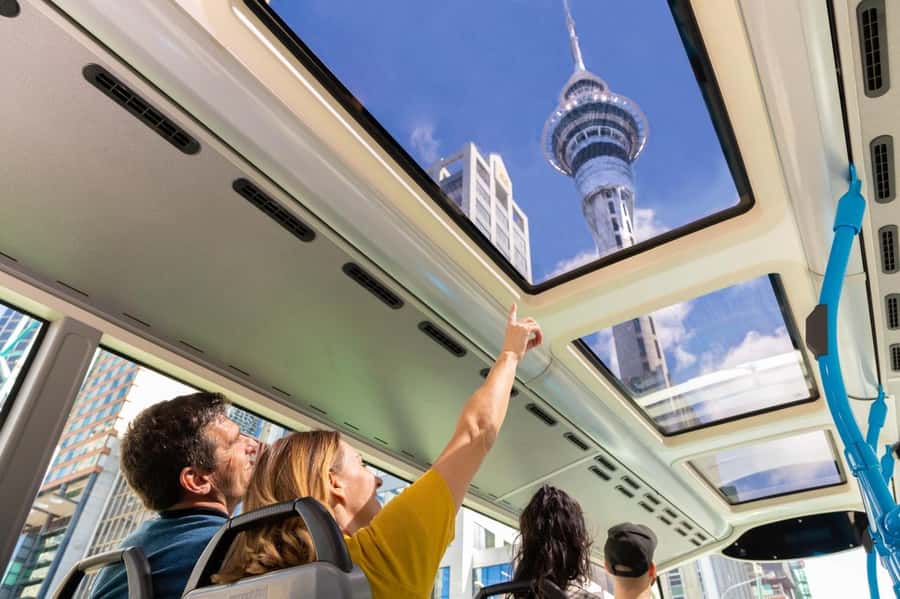
Auckland can feel spread out, especially if it’s your first day. This bus solves the main problem: you don’t need to figure out routes, parking, or backtracking just to see the highlights. You can ride, look, and then decide when you’re ready to get off.
I also like the pace of the day it creates. In about an hour, you get a full loop on the Red route, so you’re not stuck doing a long “sit-and-stare” tour. It’s more like a moving timetable for Auckland’s top sights.
You can also read our reviews of more tours and experiences in Auckland



Routes and Timing: Red Inner Loop vs Blue Outer Bonus

Red Inner Tour (runs year-round)
This is the core circuit: downtown and central Auckland, plus the eastern highlights and the aquarium. It has 9 stops and takes about 60 minutes for a full loop when buses run normally.
The Red route is your best bet in winter (May–September) since the Blue route doesn’t run then. If you only want one ticket-driven plan for a day, Red is the workhorse.
Blue Outer Tour (October to April only)
In summer season (October–April), you get a second loop with 6 stops. It’s built for a slightly wider swing around the city: Domain Winter Gardens, Mt Eden / Maungawhau, the Eden Park area (Kingsland), Auckland Zoo, and MOTAT.
The Blue route also takes about 60 minutes for its full, non-stop loop. That matters because you can’t squeeze it into a rushed schedule and expect it to work.
A useful way to think about it
Instead of trying to do every stop, I’d plan your day like this: ride the loop once to see where you want to spend extra time, then come back to those areas on subsequent passes. That’s when hop-on hop-off tickets start paying for themselves.





Finding the Bus: Customs Street East and Sky Tower Corner

You’ve got two main places to start.
Departure point #1 is at the bus stop outside 23 Customs Street East.
Departure point #2 is at the Sky Tower corner of Victoria and Federal Streets in the Auckland CBD.
A practical tip: don’t treat this as a “walk up and hope” moment. Some people have found it confusing to locate the right spot and ticket pick-up area near Sky Tower. When you arrive early, take two minutes to confirm you’re at the correct stop before you commit to timing your day.
Red Inner Tour: Downtown Icons to SEA LIFE Kelly Tarlton’s
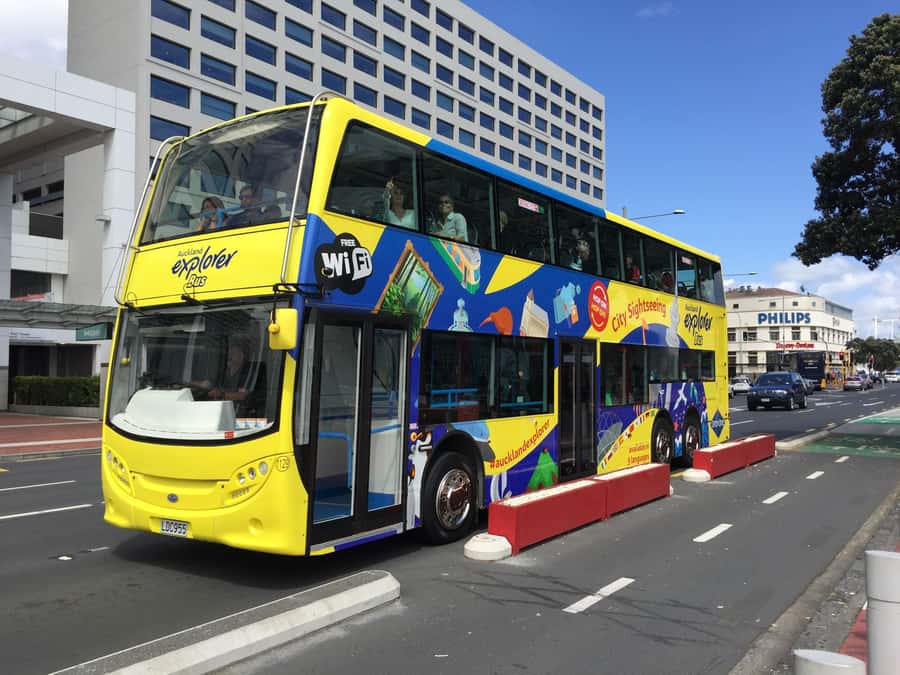
The Red route is packed with stop types that let you mix interests: skyline views, sports culture, art, classic Auckland neighbourhoods, and an aquarium visit that’s easy to build around.
Downtown Auckland
This is where the day starts and where the Red route returns. It’s useful because it keeps you anchored in the CBD, so you can come back when you run out of energy or time. If you’re catching this on a cruise day or you have a tight schedule, this “home base” feeling is a real plus.
Sky City / Sky Tower
This stop is for big views. The Sky Tower is described as the tallest freestanding structure in the Southern Hemisphere, so it’s the kind of attraction that instantly changes how you understand the city.
If you get off here, I’d treat it as a photo-and-overview stop. Even if you don’t go inside, it’s a strong landmark for planning where things are once you’re back on the street.
Weta Workshop Unleashed
This is one of the stops that helps Auckland feel more than just “city streets and museums.” If you like pop-culture design and the way creative teams build real things, it’s a smart pause point.
Keep expectations practical: this is a paid attraction stop. Your bus ticket gets you there with time flexibility; it doesn’t cover entry fees.
The All Blacks Experience
Another stop that turns Auckland into a destination beyond geography. It’s a good choice if you want a cultural hit that’s not just about architecture or scenery.
Again, build time around it. Don’t hop off for the name alone and then sprint back to the next loop—you’ll feel rushed.
Queen Street
Queen Street works well as a “reset” stop. You can use it for quick wandering, shopping time, or simply to break up museum-heavy hours.
If you’re pairing Queen Street with another stop, I’d do it like this: hop off, spend a controlled chunk of time, then re-board before you lose your place in the loop.
Auckland Art Gallery
This is one of the most compelling reasons to ride the Red route. The Auckland Art Gallery is described as New Zealand’s largest art collection, which makes it a high-value museum stop even if you’re not an all-day art person.
If you’re doing it properly, plan for more than a quick look. One of the best tactics is to use the bus loop for arrival timing—then settle in at the gallery and let it set the pace.
Newmarket
Newmarket gives you a different vibe from the core CBD stops. It’s a good place to shift from indoor time (art/museums) to street time.
This is also a smart area if you’re trying to fit food or relaxed sightseeing without committing to a specific attraction entry.
Auckland Museum
This stop is about turning curiosity into context. The area is one of the big “learn something” stops on the route, and it’s also where the bus connects for the seasonal Blue route.
If you’re on a summer day and you want both loops, this is where you should pay attention. It’s the natural switch point in the day’s flow.
Holy Trinity Cathedral
Cathedral time is a nice contrast to the high-energy “attractions on rails” feeling elsewhere on the loop. It’s a calmer stop where you can slow down and take in the architecture and streetscape around it.
If the weather is rough, this kind of stop can also help keep your day from turning into a scramble between indoor venues.
Parnell
Parnell is on the Red route as a village-style pause point. It works best if you want a neighbourhood feel between major sights.
I like using stops like this as buffer time. You can step out, see what you’re in the mood for, and decide whether you want a longer wander.
Bastion Point
Bastion Point is one of the Red route’s “you’re in Auckland now” coastal viewpoints. It’s an easy stop to turn into a quick rest break with a view, then re-board when you’re ready.
If you’re doing a day with multiple paid stops, Bastion Point is a good one to keep it balanced. Not every stop needs an admissions ticket.
SEA LIFE Kelly Tarlton’s
This is your underwater payoff. The bus description highlights penguins, sharks, and other ocean wonders, which gives you a clear theme for what you’ll see once you step off.
This stop also tends to be an all-ages anchor. If you’re travelling with kids, it’s one of those practical “everyone gets something” choices.
One accessibility consideration: the zoo-related walking distance can be an issue for some visitors with mobility needs, and the wider lesson applies here too—plan for walking around attractions, not just boarding the bus.
Blue Outer Tour: Domain, Mt Eden, Zoo, and MOTAT (Summer Only)
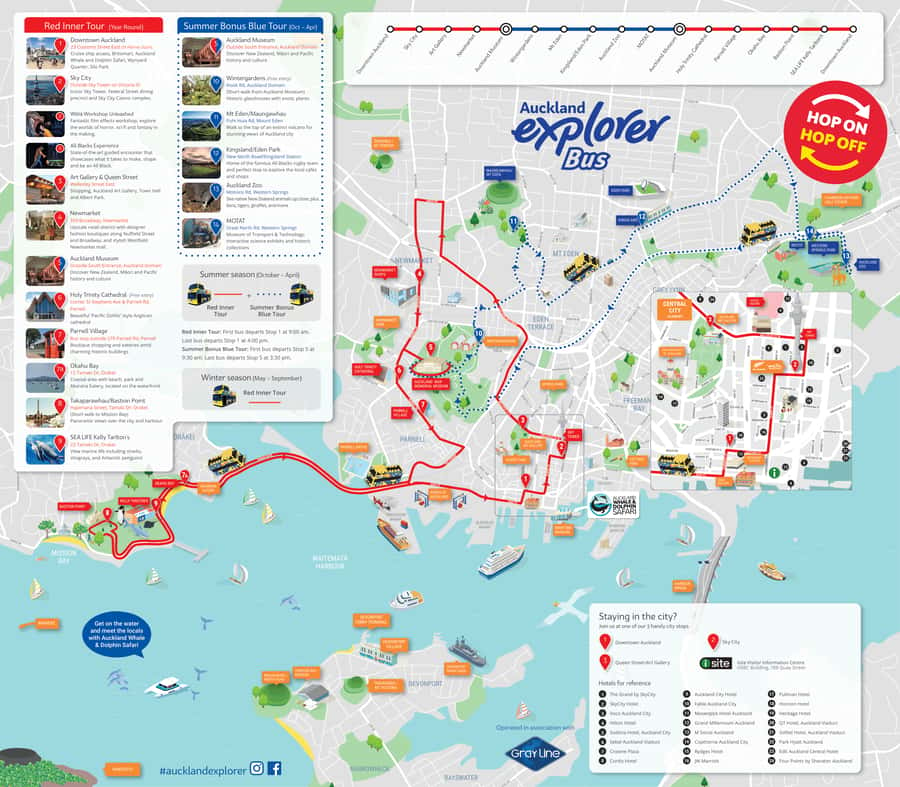
When the Blue route runs, it’s a nice way to add “city viewpoints + bigger attractions” without changing your whole day plan. It’s also the seasonal reward for riding in warmer months.
Auckland Museum (connection point)
Blue starts where it connects with the Red route. That matters because you can build a day that flows: ride Red, then shift to Blue when it makes sense rather than treating it like two separate trips.
Wintergardens, Auckland Domain
This is your greenery and walking pause. Wintergardens are an easy contrast after CBD stops, and they’re especially useful if you want a more relaxed hour without a big-ticket entry expectation.
Mt Eden / Maungawhau
Mt Eden is a signature Auckland name, and even if you don’t turn it into a long hike, it’s a key stop for viewpoint potential. The bus puts you at the start of that kind of city-skyline thinking.
If you’re short on time, treat Mt Eden as a get-off, look, and re-board efficiently kind of moment.
Kingsland / Eden Park
This stop places you near the Eden Park area. It’s a good choice if you like sports culture, architecture, or simply want a different part of town than the waterfront-and-CBD rhythm.
Auckland Zoo
The zoo stop is straightforward: it’s for a longer attraction block. If you have mobility needs, the practical advice is to expect walking at the attraction itself, not just on and off the bus. For some visitors, the bus is helpful, but the overall walking distance still matters.
MOTAT (Museum of Transport and Technology)
MOTAT is a strong option if you want something hands-on or playful compared to classic museum halls. The bus gives you convenient access without requiring separate planning.
I’d use MOTAT when you want a full “activity” stop rather than a quick photo break.
Onboard Audio, WiFi, and How to Hear the Commentary
You get informative English commentary during the ride. That alone is worth something, especially when you’re moving quickly across neighbourhoods and want the city story to make sense.
There’s also multilingual support: Mandarin, Spanish, German, and Japanese audio is available through an app, but headphones are required. If you’ll use the app, download and test it before you sit down, so you’re not dealing with phone settings while the bus pulls away.
One real-world caution: some people have said the sound on the upper deck isn’t easy to hear. If this matters to you, try the lower level first, or bring your own way to listen clearly through the app.
WiFi is complimentary, which is handy for two things: re-checking where you are on the route and quickly looking up what you actually want to do at your next hop.
Planning Your Day: Avoiding Long Waits and Building a Smart Loop
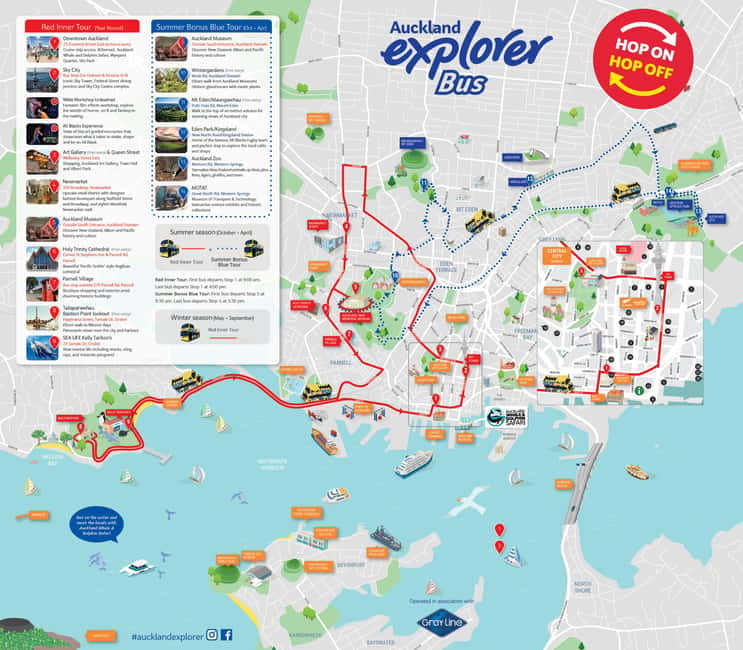
The bus runs in loops, so your “time strategy” matters more than your exact start time. A Red route loop takes about 60 minutes, and the Blue loop is also about 60 minutes.
Here’s how I’d use that:
- If you arrive with limited time, do the loop first.
- If you’ve got half a day or more, hop off at your top 2–3 priorities and then come back for the rest later.
Do expect that the gap between buses can sometimes stretch, and you may feel it at certain stops. If you’re visiting paid attractions with set entry times, I’d build in cushion so you don’t end up sprinting from the stop.
Also, pick the order that matches your energy. Indoor-heavy stops like galleries and museums are easy to chain early. Outdoor ones like coastal points or viewpoints are nicer when you’ve got daylight.
Comfort, Service, and Practical Issues to Watch

Most of what people praise here is practical: clean modern buses, helpful staff, and an overall easy experience. It’s also a service that shows up when you need help—there’s at least one story of staff being quick to return a lost phone, which tells you they’re paying attention.
A few comfort notes to keep realistic expectations:
- Some people have had trouble finding the bus stop at first, so give yourself a couple minutes to orient.
- The upper-deck audio can be hard to hear at times, so seat choice matters if you’re sensitive to sound.
- Waiting times can run longer than you’d like at certain stops, so don’t build a schedule down to the minute.
- There isn’t reliable trash-bin access on the bus, so keep a small plan for litter.
Price and Value: Getting $38 Worth of Auckland Time
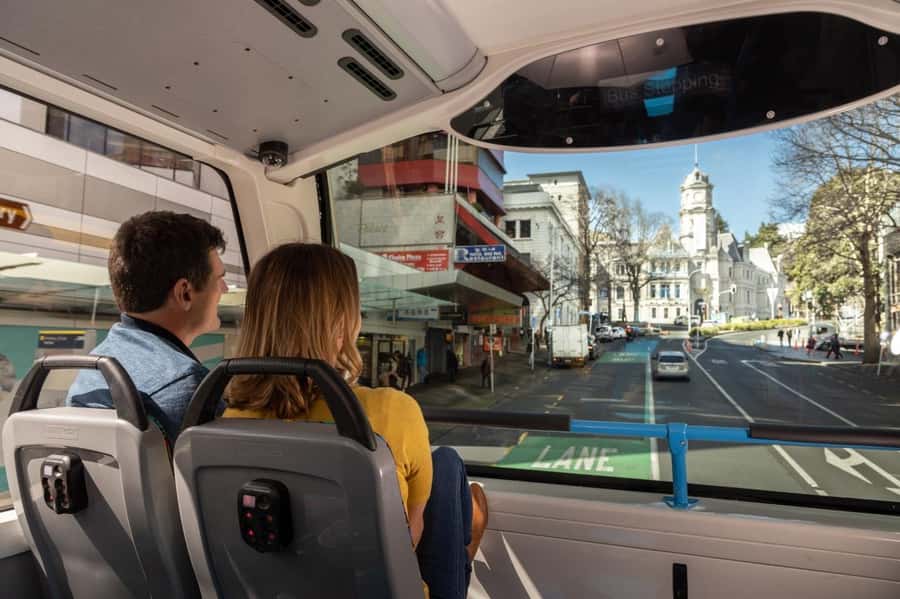
The ticket price is $38 per person for a 1-day pass, valid from the first time you activate it. That price buys you transportation and the commentary—not the attraction entrances.
So the value equation is simple:
- If you plan to visit only one paid attraction, the bus can feel like an expensive taxi with narration.
- If you plan to visit a couple of paid spots—or you’re short on time and want a stress-free way to reach the right areas—the bus starts to make sense fast.
To make this ticket work, I’d choose stops that naturally match the way you like to travel:
- Pick one “big skyline” or viewpoint moment (Sky Tower or Bastion Point).
- Pick one museum or learning block (Art Gallery, Auckland Museum).
- Pick one themed activity (SEA LIFE Kelly Tarlton’s, Weta Workshop Unleashed, All Blacks Experience, MOTAT).
That’s how the $38 turns into a full-day plan instead of a ride you regret.
Should You Book the Auckland Hop-On Hop-Off Explorer Bus?
Book it if you want a low-effort first-day orientation that still gives you real choices. It’s especially good if you like the idea of doing a full loop, then returning to the places you actually care about most.
I’d think twice if you hate timing pressure. Because the bus loops and re-boarding depends on headways at each stop, you’ll feel it if you’re trying to keep a tight itinerary with no slack. Also note that if sound clarity is a deal-breaker for you, the upper-deck commentary may not be consistently easy to hear.
If you’re arriving in Auckland with limited time, or you just want to stop thinking about transport for a day, this is a solid buy.
FAQ
How long does the Red Inner Tour take to complete?
The Red route loop takes about 60 minutes to complete a full, non-stop circuit.
How many stops are on the Red and Blue routes?
The Red Inner Tour has 9 stops. The Blue Outer Tour has 6 stops.
When does the Blue Outer Tour operate?
The Blue Outer Tour runs from October to April only.
Are attraction entrance fees included?
No. The ticket covers the hop-on hop-off bus and onboard commentary, but entrance fees to attractions are not included.
What languages are available for audio commentary?
You get English commentary, plus multilingual audio in Mandarin, Spanish, German, and Japanese through an app (headphones required).
Is there WiFi on the bus?
Yes. Complimentary WiFi is included onboard.
Where do the buses depart from?
Departure point #1 is at the bus stop outside 23 Customs Street East, and departure point #2 is at the Sky Tower corner of Victoria and Federal Streets.