REVIEW · AUCKLAND
7 – Day North to South Island Grand Tour – Auckland to Queenstown
Book on Viator →Operated by Leisure Tours · Bookable on Viator
Seven days to cover both islands without flying sounds tempting. This north-to-south Grand Tour is built for speed, but it still hits the key stops: Waitomo caves, Rotorua’s geothermal culture, Wellington, Kaikoura whales, Christchurch history, and the Mt Cook–Queenstown mountain finale.
I like two things a lot. First, you don’t have to price out every entry ticket and transport step—admissions and listed transport are included. Second, you get four-star accommodation in several of the big hubs (Rotorua, Wellington, Kaikoura, and Christchurch), which keeps the trip from feeling like nonstop backpacking misery.
The main drawback is also the honest one: this is an early-start, long-travel-day style of tour. You’ll spend more hours on the move than on a beach.
In This Review
- Key things I’d note before you book
- Auckland start: the 6:00 am push and why Waitomo matters
- Rotorua’s geothermal culture at Whakarewarewa
- Lake Taupo to Wellington: long road day, short pauses, real capital time
- Interislander ferry and the Picton-to-Kaikoura connection
- Whale Watch Kaikoura plus Waipara wine: one sea, one sip
- Christchurch cathedral tour and rebuild stories you can actually see
- The Mt Cook to Queenstown finale: Lake Pukaki, passes, and grand views
- Is $1,790.35 good value for an Auckland to Queenstown loop?
- Who this tour suits best (and who should look elsewhere)
- Should you book this Auckland to Queenstown Grand Tour?
- FAQ
- How long is the Auckland to Queenstown tour?
- What are the start time and overall route?
- Is hotel pickup included?
- What kind of accommodation do you get?
- Are admission fees included?
- What about meals and drinks?
- Is the coastal train always part of the Kaikoura route?
- Is whale watching included?
- How many people are in the group?
- How far ahead can you cancel for a full refund?
Key things I’d note before you book
- Small group size (max 15) plus hotel pickup makes the day-by-day plan feel manageable.
- Waitomo Caves guided time is scheduled mid-morning, with lunch time on your own afterward.
- Rotorua’s Whakarewarewa Living Maori Village combines geothermal setting with a structured cultural visit.
- Interislander ferry breaks up the Wellington to Marlborough Sounds section with a real change of pace.
- Kaikoura whale watch is included, with sperm whales in the deep waters off the coast year-round.
- Seasonal rail changes can swap the coastal train for coach depending on the months you travel.
Auckland start: the 6:00 am push and why Waitomo matters
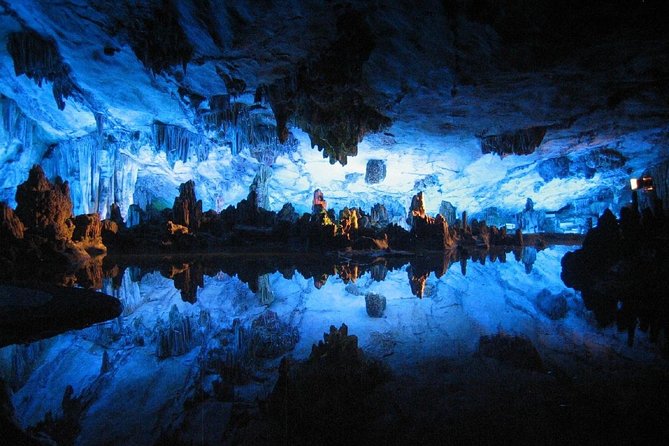
The tour kicks off at 6:00 am from Auckland. That sounds intense, and it is. But the upside of starting early is that you get to see more places before your energy runs out—especially on Day 1 when the trip is designed to move fast.
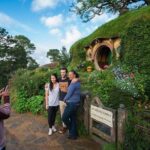
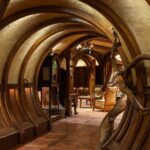
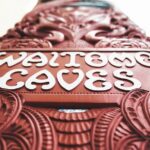
After pickup from your accommodation, you head south by road with a stop at Waitomo Caves for a guided tour. The big value here is that you’re not figuring out logistics on the fly. A guide leads the cave portion, and you get about 2 hours total at Waitomo to do the tour and manage lunch on your own.
From Waitomo, you continue to Rotorua, arriving mid-afternoon. Rotorua is your base for two nights, which helps because you’re not constantly packing and unpacking.
Potential downside to keep in mind: you will likely want a hearty breakfast and a calm mindset. The first day is a lot of motion right away.
You can also read our reviews of more tours and experiences in Auckland.

Rotorua’s geothermal culture at Whakarewarewa
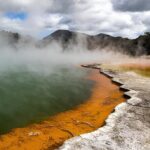
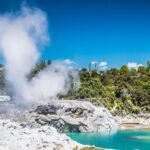
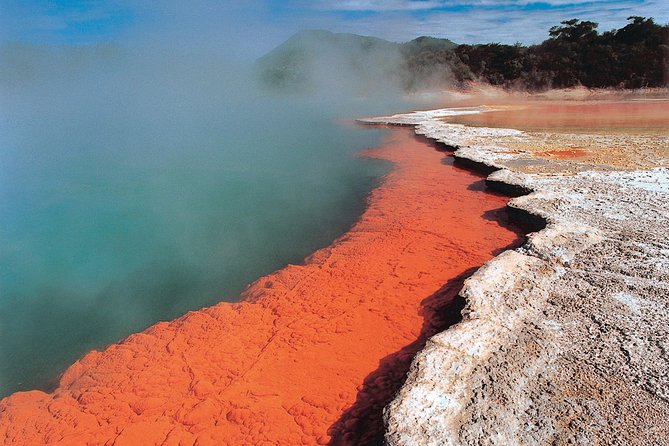
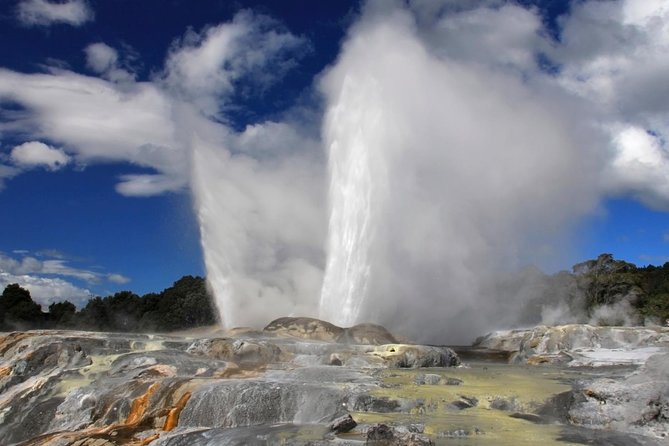
Day 2 is one of the most characterful parts of the whole trip. You’re collected from your accommodation and taken to Whakarewarewa Geothermal Reserve and the Living Maori Village, where a guided tour is arranged.
This stop matters because it’s not just scenery. It’s designed to connect place with people. Rotorua’s geothermal activity is part of the region’s identity, and the living village format gives you a chance to see Maori culture in a structured, interpretive way instead of just reading about it later.
You’ll have about 3 hours here, and the entry is included. In practical terms, it’s also a good use of time because the geothermal reserve and the cultural elements are tied together—so you’re not sitting around waiting for the day to begin.
Lake Taupo to Wellington: long road day, short pauses, real capital time
On Day 3, you leave Rotorua and travel south toward Wellington by coach, with several scheduled stops.
Your first named stop is Lake Taupo. You’re there briefly—around 15 minutes—with admission noted as included. The goal here is orientation and getting those lakeside views without losing the whole day to slow sightseeing.
Next comes Palmerston North for another short stop (about 15 minutes). After that, the route runs along the Kapiti Coast, with views of Kapiti Island and Cook Strait, and on a clear day you may be able to see the Southern Alps.
Then you roll into Wellington, New Zealand’s capital. You’re transferred to a central city hotel, and the evening is yours to explore on foot.
This is where the tour earns its keep for first-timers. Wellington is the one place on this route where you can slow down a bit. You won’t be staring at a bus schedule all night. Even if you only manage a short walk and a casual dinner, Wellington’s compact center makes that easy.
A small heads-up: the description notes that the Rotorua to Wellington coach is a full-service coach with limited or no commentary. So plan to enjoy the scenery, not expect constant narration.
Interislander ferry and the Picton-to-Kaikoura connection
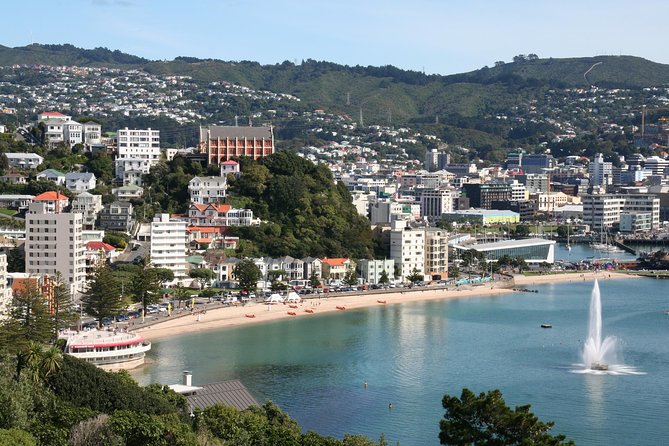
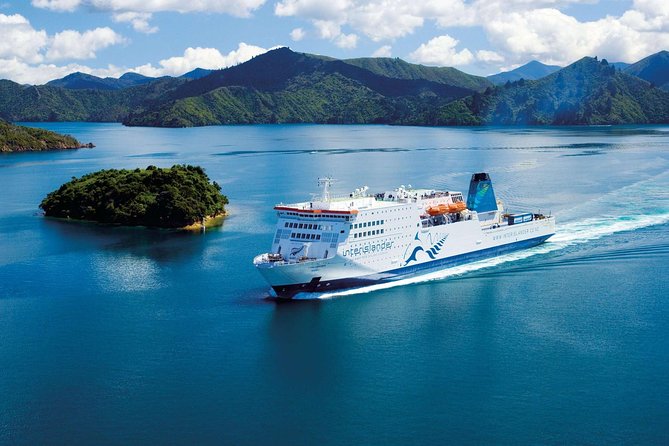
Day 4 is basically a change of scenery with a built-in travel buffer. You leave Wellington on the Inter-Islander ferry for a 3-hour crossing to Picton, in the Marlborough Sounds.
That ferry time is included, and it’s one of those moments that makes a fast itinerary feel human. You get a break from road travel, plus you’re looking at water instead of roadside views.
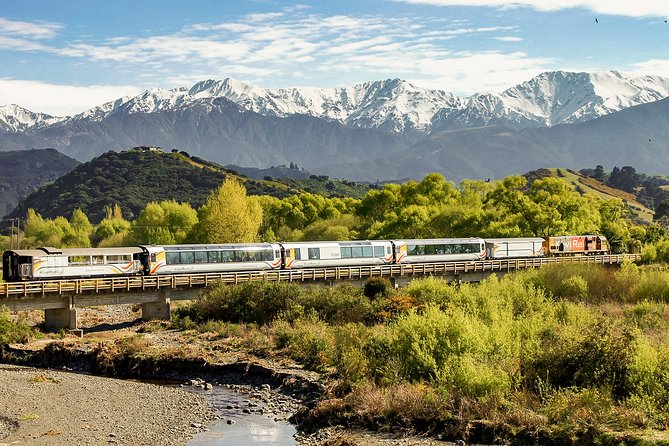
In Picton, you board the TransCoastal train to Kaikoura. This is the part that’s strongly dependent on season:
- The train isn’t available from May through September.
- During those months, the route uses coach instead (including a pass through Blenheim), following the Pacific coastline to Kaikoura.
The tour is still designed to keep the “coastal wow” portion in place, but how you experience it changes. If you’re traveling in-season for rail, you’ll appreciate the relaxed rhythm of sitting back while the coastline rolls past. Out of season, you’ll still see the route, just with a more typical road travel feel.
You reach Kaikoura in the afternoon/evening window (the itinerary frames it as part of the day’s progression), and Kaikoura is your destination for that day.
Whale Watch Kaikoura plus Waipara wine: one sea, one sip
Day 5 is where the tour stops being just driving and becomes a headline experience. You start with Whale Watch Kaikoura, where you’re set up to see giant sperm whales. The notes say they reside in the deep waters off the coast year-round, which is exactly why Kaikoura is a go-to spot.
You’ll have about 3 hours for the whale watching activity. Even if you’re not a hardcore wildlife person, this one tends to land because it’s a real “New Zealand specific” moment. It’s not a generic zoo stop. It’s the coast doing what it does best.
In the afternoon, there’s also a scheduled potential stop at Waipara Hills, described as a stop at a winery in Waipara with wine tasting opportunities. The stop is timed at about 30 minutes and is listed as time permitting. The value isn’t turning the day into a wine weekend. It’s a quick taste of a region known for producing New Zealand’s wines.
Then you head to Christchurch for the next night. You get a central base for the evening, with leisure time to explore.
Practical tip for this day: bring layers. Whale watches and coastal weather can swing fast, even if the rest of the itinerary feels sunny in your head.
Christchurch cathedral tour and rebuild stories you can actually see
Day 6 is for Christchurch’s “after the earthquake” reality, and it’s handled in a direct way.
You’re collected from your hotel for a sightseeing tour of the Christchurch Cathedral area. The description is clear that the city center was severely damaged by earthquakes in 2010 and 2011, and that shaped what you’ll see.
This is not just a pretty church stop. It’s a way to understand place through change. You’ll come away with a stronger sense of why Christchurch looks the way it does today—what was rebuilt, what wasn’t, and how a city moves forward after major disruption.
After the 3-hour cathedral tour, the rest of the day is free for you to keep exploring. You’re back at accommodation again in Christchurch City.
This day is a good balance after Kaikoura’s ocean focus. You move from marine life and countryside roads to a city where history isn’t stuck in the past; it’s visible in the present.
The Mt Cook to Queenstown finale: Lake Pukaki, passes, and grand views
Day 7 is the payoff day, and it’s packed—but it’s also the most scenic sequence of the entire week.
You start with a stop at The Church of the Good Shepherd. Then you travel through Canterbury Plains and across Burkes Pass before descending toward Lake Tekapo.
From there, you continue to Mt Cook Village:
- You travel up the western side of Lake Pukaki.
- You have about 1 hour at Mt Cook Village for lunch on your own and time to look around.
Then the route keeps unfolding: you leave Mt Cook early afternoon and follow the shores of Lake Pukaki toward Twizel, then go through the Lindis Pass and head toward Lake Dunstan.
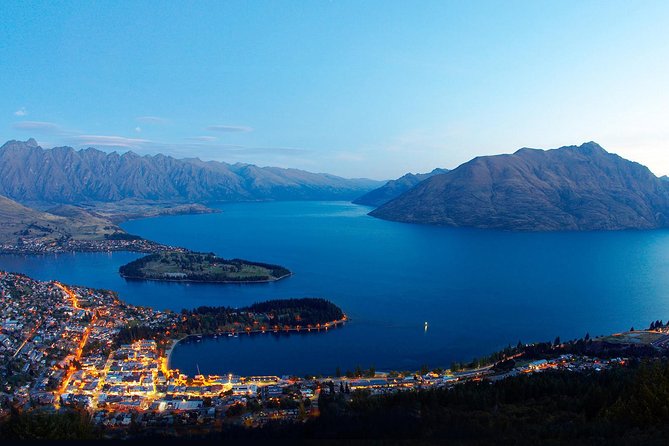
The drive continues through the Cromwell area. On route you pass the old suspension bridge and the A J Hackettts Bunny Jump attraction before arriving in Queenstown in the early evening. The tour ends with a drop-off at your accommodation (your own arrangements for getting your luggage settled).
If you want a one-sentence summary of why this tour works, it’s this: you finish with the kind of Southern Alps views that make the earlier bus time feel worth it.
Is $1,790.35 good value for an Auckland to Queenstown loop?
Here’s how I’d think about the price in practical terms.
You’re paying about $1,790.35 per person for a 7-day package that includes:
- air-conditioned vehicle transport,
- hotel pickup and drop-off,
- commentary by local guides in parts of the trip,
- four-star accommodation in key places (Rotorua, Wellington, Kaikoura, Christchurch),
- and listed admission fees and transport/tour fees.
That’s the value engine. If you travel independently, you’ll still want guided cave time in Waitomo, a Maori cultural visit in Rotorua, a whale watch in Kaikoura, and a cathedral tour in Christchurch. Adding those back in later is where self-planning often gets expensive fast—especially with inter-island ferry time and the seasonal rail option.
What you’ll still pay yourself:
- food and drinks (not included),
- optional gratuities.
So the true question is whether you want to spend your effort on planning and ticket pricing, or on enjoying the route. If your goal is to get a first-timer’s overview without building spreadsheets, this package style tends to be a strong fit.
Who this tour suits best (and who should look elsewhere)
This is a smart choice if you:
- want to see both islands in about a week,
- prefer having the “what to do next” handled,
- like big included highlights (caves, culture, ferry, whales),
- and don’t want to worry about seasonal transport changes on your own.
It may be less ideal if you:
- hate early starts (you begin at 6:00 am),
- want lots of free time to wander for hours without a schedule,
- or dislike long road stretches between cities.
For most people, though, it’s a clean trade: more movement, less planning, and fewer surprises.
Should you book this Auckland to Queenstown Grand Tour?
If you’re weighing an independent trip versus a packaged one, I’d lean toward booking this if your priority is high-impact highlights with less logistics stress. The best parts are the built-in anchor experiences—Waitomo’s guided cave visit, Whakarewarewa’s Maori cultural setting, Interislander ferry time, and the Kaikoura sperm whale watch—all paired with four-star bases in major hubs.
If you’re the type who dreams of slow travel and deep downtime, you might feel boxed in. But if your style is “see it all, then decide what deserves a second trip,” this route gives you a solid first map of New Zealand.
FAQ
How long is the Auckland to Queenstown tour?
It runs for about 7 days.
What are the start time and overall route?
The tour starts at 6:00 am in Auckland and ends in Queenstown.
Is hotel pickup included?
Yes. Hotel pick-up and drop-off are included for the destinations listed in the itinerary.
What kind of accommodation do you get?
The tour includes four-star accommodation in Rotorua, Wellington, Kaikoura, and Christchurch.
Are admission fees included?
Yes. Admission fees and all transport/tour fees listed in the itinerary are included.
What about meals and drinks?
Food and drinks are not included.
Is the coastal train always part of the Kaikoura route?
No. The itinerary notes that the TransCoastal train is not available from May through to September. In those months, travel is by coach instead. The Coastal Pacific train is only available October through April.
Is whale watching included?
Yes. A Whale Watch Kaikoura tour is included, with the chance to see giant sperm whales.
How many people are in the group?
The maximum group size is 15 travelers.
How far ahead can you cancel for a full refund?
You can cancel up to 6 days in advance for a full refund. A full refund requires canceling at least 6 full days before the experience start time.