REVIEW · AUCKLAND
The Inside Loop: See Auckland’s Coolest Neighbourhoods
Book on GetYourGuide →Operated by Power to the Pedal · Bookable on GetYourGuide
Auckland looks different at e-bike speed. This small-group ride uses electric bikes to cover more ground than walking, while your guide’s live headset commentary keeps you tuned in as you pass real local spots off the usual tourist map.
Two things I really like: the combination of smooth cycleways with frequent stops for photos and context, and the practical focus on where to eat, drink, shop, and hang out after the tour. One consideration: you do need enough confidence for occasional city-street bits, not just dedicated paths.
If you want a neighborhood sampler that gives you momentum for the rest of your Auckland days, this is a strong first-booking choice.
In This Review
- Key reasons The Inside Loop feels worth your time
- Why an e-bike tour is the smart way to see Auckland neighborhoods
- Starting at Princes Wharf: central, easy to reach, easy to recover
- Te Wero Bridge, the Viaduct, Quay Street, and Britomart’s food-and-shop momentum
- Grafton Gully cycleway and K Road: hill energy to social street smarts
- The Pink Path and Ponsonby’s backstreets: where Auckland feels lived-in
- Wynyard Quarter to the finish at the waterfront: a smart end to your city day
- Price and time: what you’re really paying for at $95 per person
- What to expect on the ground: gear, pace, and comfort rules
- The guide experience: live commentary and the small-group feel
- Who should book The Inside Loop (and who should skip it)?
- FAQ
- How long is The Inside Loop e-bike tour?
- What’s included with the bike ride?
- Where does the tour start?
- Do I need experience riding a bike in the city?
- What shoes should I wear?
- Is there a minimum age or height requirement?
- Should you book The Inside Loop in Auckland?
Key reasons The Inside Loop feels worth your time

- Small group (max 6 riders plus a guide) means more questions and less crowding at stops
- E-bike assist makes hills and longer stretches feel doable, even if you’re not a regular cyclist
- Live commentary through a cycle-specific headset helps you learn while you ride
- Off-the-standard-route neighborhoods like K Road and Ponsonby, with local recommendations for what to do next
- Iconic Auckland cycling features like the Pink Path and major waterfront viewpoints
- Souvenir photos are included so you’re not scrambling for pictures mid-ride
Why an e-bike tour is the smart way to see Auckland neighborhoods

Auckland is one of those cities where the “good stuff” is spread out. On foot, you’d either move too slowly or miss a lot. On a regular bicycle, you might save energy for the hills and skip the long connectors. With an electric bike, you get the best tradeoff: you travel fast enough to feel efficient, but slow enough to actually notice streets, shopfronts, and the vibe of each area.
The tour also leans into something I appreciate: it’s not just sightseeing. You get an insider run-down of where people go for food, drinks, shopping, and cultural experiences—plus ideas you can act on right away once you’re back on your own schedule.
There’s also a nice human scale here. With a maximum of 6 riders, the guide can pause for questions and make the commentary feel tailored, not like a lecture through a megaphone.
You can also read our reviews of more tours and experiences in Auckland.



Starting at Princes Wharf: central, easy to reach, easy to recover
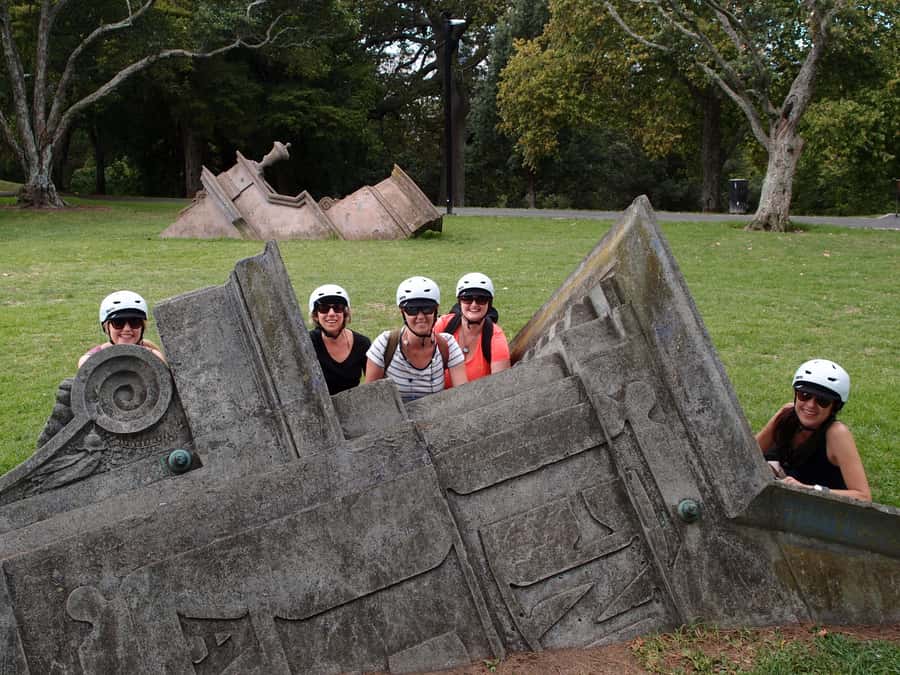
The ride begins at a spot that’s about as convenient as it gets for a city day: Princes Wharf, Unit 8/145 Quay Street. It’s a short walk from major hotels in the center and close to cruise ship terminals, which matters if your day is on a time limit.
What I like about this kind of meeting point is what it does for your plans later. Before you set off, you can grab water or do a quick check of your surroundings. After you return, you’re already in the area where you can keep exploring or settle in for dinner without a long commute.
When you arrive, you’re kitted with everything you need: helmet, riding gear, and a cycle-specific headset so you can safely listen to the guide while you pedal. They also do a short orientation plus a practice ride nearby. That matters more than people think—if you’re unfamiliar with e-bikes, that warm-up turns the experience from “hope I don’t mess this up” into “I can actually enjoy the ride.”
Te Wero Bridge, the Viaduct, Quay Street, and Britomart’s food-and-shop momentum
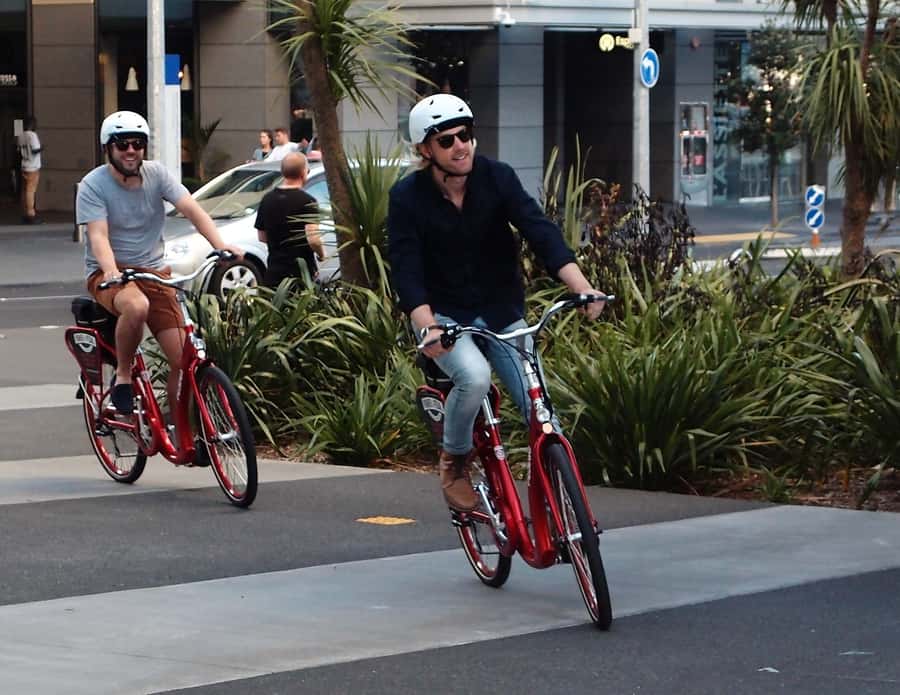
Once you leave the city center, the first big connector is Te Wero Bridge. It’s one of those rides where you feel the city open up and you get an early sense of direction—helpful when you’re trying to build a mental map of Auckland.
Then you roll into the Viaduct, followed by Quay Street past the old Ferry Building and Queens Wharf. This stretch is a good balance of classic waterfront energy and practical city layout. You’re not just seeing water—you’re seeing how Auckland connects its downtown to the working port and the areas people actually use day to day.
Next up is the Britomart precinct, where the tour shifts from “getting oriented” to “getting recommendations.” Britomart is packed with shops and restaurants, so the guide’s context pays off immediately. If you listen closely during this portion, you’ll start noticing what kinds of places each area is known for—more casual cafes here, more dining and shopping options there.
For many people, this is the part that makes the rest of the tour click. You’re not waiting until the end to hear what to do. You’re collecting ideas in real time as the city changes under your tires.
Grafton Gully cycleway and K Road: hill energy to social street smarts
The ride then goes up the Grafton Gully cycleway. Expect real uphill riding, and that’s exactly why the e-bike motor is the star here. Even if your legs get a workout, the assist keeps it from feeling like a grind. More importantly, it keeps the hill from turning into a reason to rush through.
After the gully, you land on Karangahape Road, locally known as K Road. This is a street with a long shift in fortunes: it used to be more elegant, then later hit a down period, and in recent years it’s revived with new restaurants, bars, cafes, and shopping.
What makes this stop valuable isn’t just the street itself—it’s the guide’s way of connecting past to present. You’ll get a sense of why the area looks and feels the way it does now, which makes it easier to choose where to spend your time later. If you’re doing this tour early in your visit, the K Road part works like a menu for the rest of your Auckland trip.
One thing to note: the tour is designed to use cycleways as much as possible, but you will also ride through city streets to reach the best areas. They’re clear that you need city-riding experience for those segments. If you’re brand-new to cycling in traffic at all, you’ll want to be honest with yourself and keep your pace and attention high.
The Pink Path and Ponsonby’s backstreets: where Auckland feels lived-in
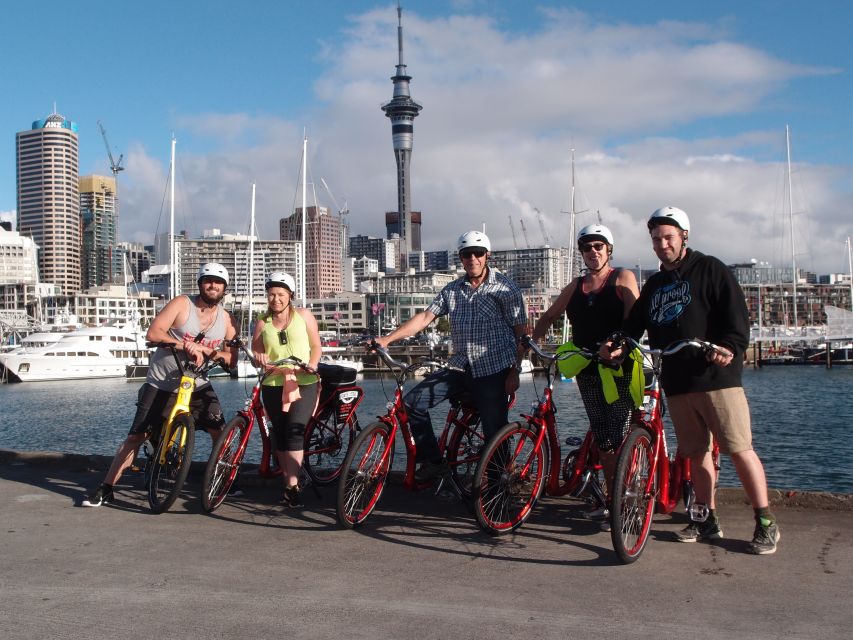
The tour then takes you onto the iconic Pink Path. It’s an Auckland cycling highlight, and the color makes it memorable—but the real value is what it represents: a city that invests in cycling routes that connect neighborhoods in a way cars can’t.
From there, you head to Ponsonby, one of the main social hubs in Auckland. It’s popular for a reason. The area has buzz, but it also has character. You’re not just rolling past landmarks—you’re experiencing the street energy with your own eyes.
One of my favorite parts of an e-bike tour is when the route turns from “main road views” to “small street texture.” That’s exactly what happens here. You go through Ponsonby backstreets on the way back down toward the waterfront, which helps you understand the neighborhood layout and where people actually walk.
You also get views of major waterfront anchors along the ride: Westhaven Marina (described as the biggest marina in the Southern Hemisphere) and Auckland Harbour Bridge. Even if you’ve seen bridge photos before, seeing the bridge while you’re moving through the city makes it feel more real. It’s one of those moments where your brain updates from postcard mode to “I get it now” mode.



Wynyard Quarter to the finish at the waterfront: a smart end to your city day
As you head toward Wynyard Quarter, the tour shifts into a “new Auckland” perspective. Wynyard Quarter is presented as one of the city’s more prestigious new developments, and it’s known for food markets and public events. That gives your ride a finishing theme: you start near downtown, move through cultural and social streets, and end in an area geared for gathering.
The final stretch returns you to your original departure point on Princes Wharf, which is convenient. You don’t end in some far-off neighborhood and then have to solve transportation from scratch. You’re set up to turn the tour into dinner plans or a second round of exploring with less guesswork.
This is also when the guide’s earlier recommendations feel especially practical. If you took mental notes during Britomart, K Road, and Ponsonby, you’ll have options ready as soon as you arrive back at the wharf.
Price and time: what you’re really paying for at $95 per person
At $95 per person for 150 minutes, you’re paying for three things that are harder to assemble on your own:
1) Time-efficient coverage
You get a structured route through multiple key neighborhoods in about two and a half hours. With bikes, you’re not just seeing one area—you’re stringing together Britomart, K Road, Ponsonby, and the waterfront.
2) Local interpretation
This tour isn’t only about moving from A to B. The guide provides context and real suggestions about where to eat and shop. That’s the kind of value that’s hard to replicate from an app, especially when you’re trying to decide quickly what’s worth your limited vacation time.
3) Guided cycling comfort
The equipment and instruction matter: e-bike, helmet, and a cycle-specific headset for live commentary. On top of that, there’s an orientation and practice ride so you’re not learning the tech at the same moment you’re riding near the city.
Compared to paying for multiple one-off experiences, this often works out as a strong “foundation” activity—especially if you book it early. It can shape the rest of your itinerary, and that’s where the money turns into real savings of time and indecision.
Small group also matters for value. With a max of 6 riders, you’re not getting drowned in the pace of a large crowd.
What to expect on the ground: gear, pace, and comfort rules
This is an easy sell if you’re comfortable on a bike, because the e-bike assist handles a lot of the heavy lifting. Still, there are some clear comfort requirements.
You’ll want closed-toe shoes—open-toed shoes aren’t allowed. Sports gear isn’t required, but dress to the conditions. Rain or shine is the plan, and you can use a free rain jacket if you need it.
Bring a water bottle, since you’ll be riding and stops are meant for photos and commentary, not long water breaks. Sunscreen is recommended year-round, and it’s smart to follow that advice because Auckland sun can surprise you.
They also provide a mounted bike bag for phones and camera. If you’re carrying extra items, there’s free storage for small bags at the city center departure point.
There are also limits you should read before you buy:
- Minimum age is 14 (14–15 must ride with an adult)
- Minimum rider height is 152 cm (5 ft)
- Maximum weight is 130 kg (287 lbs)
- Unaccompanied minors aren’t allowed
Those rules are there for safety and bike fit, and they’re part of why the tour can keep the group tight and the ride smooth.
The guide experience: live commentary and the small-group feel
The biggest thing that stands out in the tour’s delivery is how the guide uses the riding time. With the cycle-specific headset, the commentary happens while you’re moving, not only at stops. That helps the ride stay connected and keeps the learning from feeling like a series of interruptions.
One guide name you may hear mentioned is Carson. In past sessions, he’s been praised for explaining the equipment clearly and giving detailed context as you ride. That kind of hosting matters on an e-bike tour, because the bike tech is part of the experience, and understanding it makes you feel in control.
There’s also a safety focus built into the setup: helmet use is required, and you’ll get orientation plus a practice ride. One rider felt the safety talk took over too much, so if you’re the kind of person who gets irritated by frequent caution reminders, try to treat it as a baseline and keep your ears open during the riding briefing.
Who should book The Inside Loop (and who should skip it)?
I’d book this if you:
- Want to learn your way around Auckland fast, especially if you don’t have many days
- Like neighborhood walking energy but want the efficiency of bikes
- Care about practical picks for where to eat and shop, not just sightseeing
- Prefer a small group and a guide who can keep the pace readable
I’d think twice if you:
- Don’t feel confident riding in the city, even for short segments of street riding
- Want a pure scenic ride with minimal instructions
- Have a tight mobility setup, since it’s still cycling-based even with e-bike assist
FAQ
How long is The Inside Loop e-bike tour?
It runs for 150 minutes.
What’s included with the bike ride?
You get an electric bike, a helmet, a cycle-specific headset for live commentary, a small mounted bag for items, a rain jacket if needed, souvenir photos, and an experienced local guide. You also get English audio guidance.
Where does the tour start?
The meeting point is Unit 8/145 Quay Street on Princes Wharf in Auckland city center.
Do I need experience riding a bike in the city?
The tour uses cycleways as much as possible, but it includes some city-street riding to reach the best spots. The tour says you need experience of city riding for those segments.
What shoes should I wear?
Closed-toe shoes are required. Open-toed shoes are not allowed.
Is there a minimum age or height requirement?
Yes. The minimum age is 14, and 14–15 year olds must be accompanied by an adult. There’s also a minimum rider height of 152 cm.
Should you book The Inside Loop in Auckland?
If you want to understand Auckland quickly and spend the rest of your trip making good decisions, I think this is a strong yes. The mix of cycleways, iconic waterfront views, and neighborhoods like K Road and Ponsonby is exactly the kind of itinerary that helps you stop guessing. At $95 for 150 minutes, you’re not just paying for transport—you’re paying for interpretation, small-group pacing, and an easy way to turn one ride into several follow-up plans.
Book it early if you can. You’ll come away with a clearer map and a short list of places to hit before your time runs out.