REVIEW · ROTORUA & GEOTHERMAL DAY TRIPS
Auckland: Rotorua Wai-O-Tapu, Te Puia with Haka
Book on GetYourGuide →Operated by Expedigo NZ · Bookable on GetYourGuide
Rotorua hits hard, and this trip bundles it all. You’ll get Wai-O-Tapu with the Lady Knox eruption up to 20 meters, then a guided walk at Te Puia to see the Pōhutu Geyser and join a traditional Māori welcome and haka. It’s a long day, but the mix of geothermal wonder and real culture makes it feel focused instead of random.
I especially like the value of having hotel pickup plus guided time at both geothermal parks, so you spend less time figuring things out. I also like that the Māori show is more than just watching: you’ll experience a pōhiri (welcome) with waiata, mōteatea, poi, and haka in Te Aronui a Rua. One possible drawback: it’s a 12-hour outing with walking, and you may feel a bit pressed for time at each stop, especially around Wai-O-Tapu.
In This Review
- Key highlights worth planning around
- From Auckland to Rotorua: the road time and why it matters
- Wai-O-Tapu and the Lady Knox Geyser: the show you’ll remember
- Wai-O-Tapu walking reality: how to enjoy it without feeling rushed
- Te Puia geothermal valley: Pōhutu Geyser plus kiwis and crafts
- Te Aronui a Rua: pōhiri welcome and haka that’s more than a performance
- Group size and pacing: what small-group comfort really changes
- What to pack (and what to skip) for a smooth 12-hour day
- Price and value: is $236 per person worth it?
- Who should book this Rotorua day trip from Auckland
- Should you book this Auckland to Rotorua tour
- FAQ
- How long is the Auckland to Rotorua tour?
- What is included in the $236 per person price?
- Do I need to buy tickets for Wai-O-Tapu?
- What will I see at Te Puia?
- What Māori elements are part of the Te Puia performance?
- Is the tour a good fit for families and children?
- Do I need a car to do this tour?
- What language is the tour guide?
- Is free cancellation available?
Key highlights worth planning around
- Lady Knox and Pōhutu Geysers: two big geothermal moments in one day.
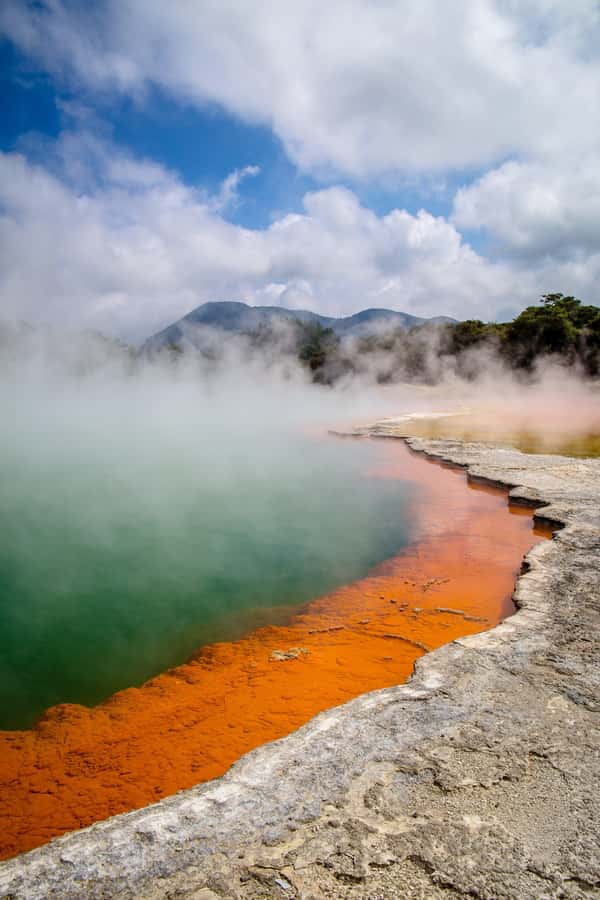
- Wai-O-Tapu walking circuit: Champagne Pool, bubbling mud pools, steaming craters, and more.
- Te Puia guided geothermal valley walk: a structured ~90-minute walk plus kiwi and crafts stops.
- Te Aronui a Rua cultural program: pōhiri, waiata, mōteatea, poi, and haka.
- Small-group Auckland pickup: convenient CBD starts with live English commentary throughout.
From Auckland to Rotorua: the road time and why it matters
This is a full-day trip, and you should treat the drive as part of the experience, not dead time. You’ll leave Auckland with pickup from selected downtown/CBD hotels, then settle into a scenic drive through New Zealand’s north island region toward Rotorua. The tour is built for a smooth rhythm: guided narration on the way, comfort stops during the transfer, and clear timing at each major stop.
Plan on a long day on your feet once you arrive. The tour requires a medium fitness level because you’re walking around geothermal parks and cultural areas. If you hate hurry at attractions, this isn’t a “wander at your own pace all day” style trip—but it does try to keep movement efficient.
One more practical point: pickups can start up to 20 minutes before departure, and the guide may make multiple stops. If you’re not ready, you’ll miss the window and the tour can’t wait around, so be outside early.
You can also read our reviews of more tours and experiences in Auckland.


Wai-O-Tapu and the Lady Knox Geyser: the show you’ll remember
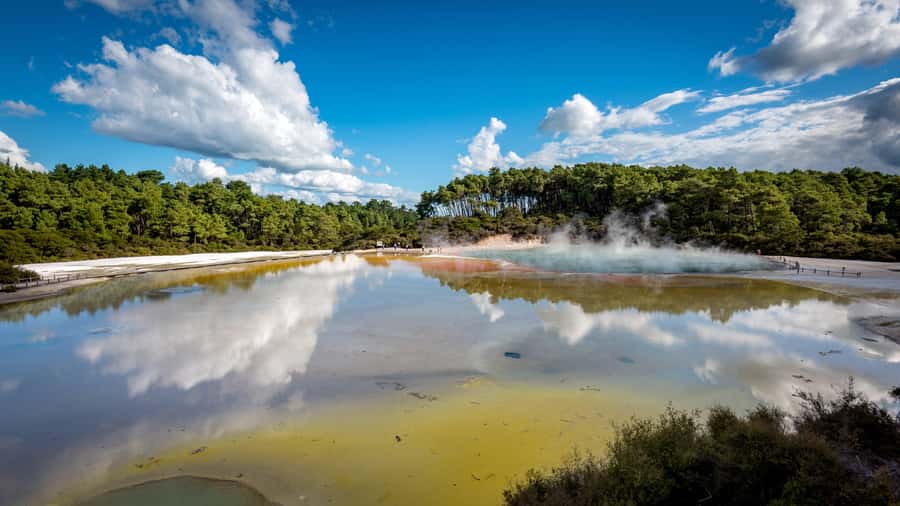
Wai-O-Tapu is the first big wow, and the timing here is the whole point. After arriving, you’ll have admission included, and you’ll skip the ticket line. The geothermal park is spread across 18 square kilometers, so the guide helps you see the highlights without spending the day zig-zagging.
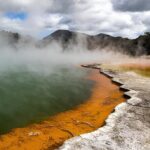
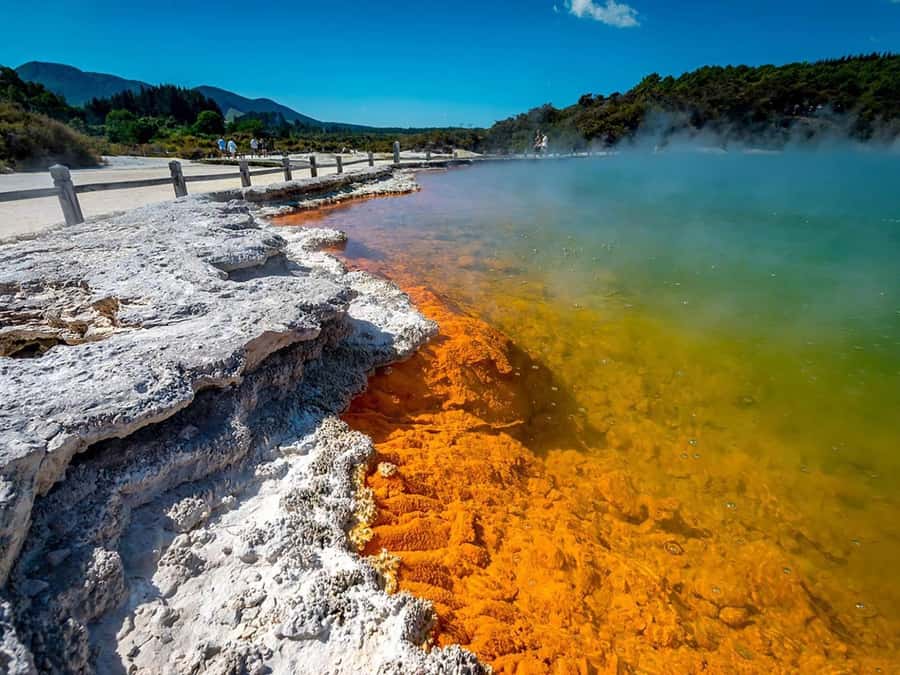
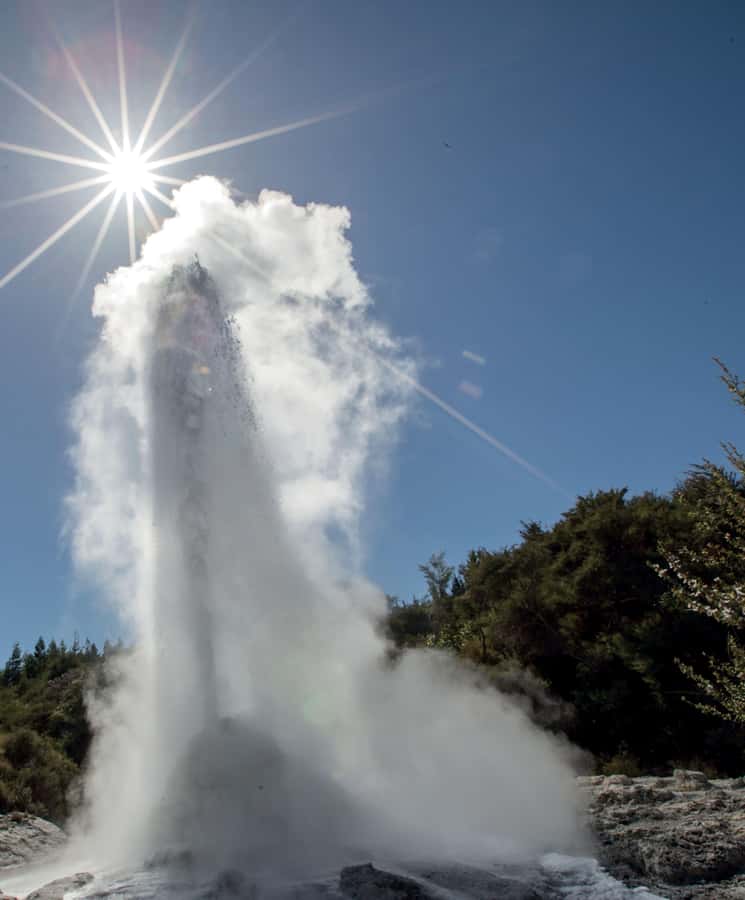
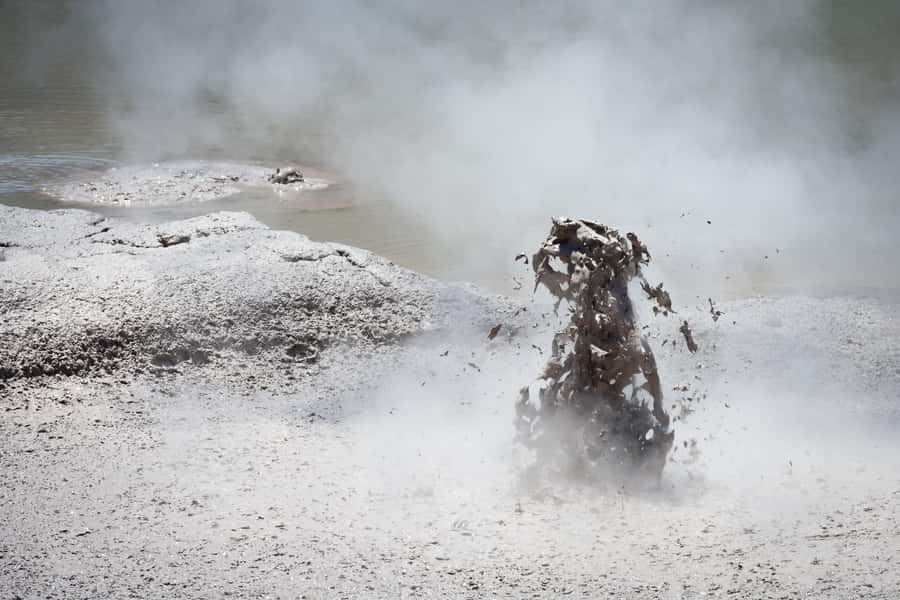
The headline moment is the Lady Knox Geyser eruption, which can rise up to 20 meters. Seeing an eruption in a geothermal park is one of those experiences that feels physical—heat, steam, and color all in one view. From there, you’ll move through the park’s best-known features, including the Champagne Pool (famous for its vivid bubbling pool) plus mud pools and steaming craters created by centuries of volcanic activity.
I like that Wai-O-Tapu doesn’t feel like one single “look here” stop. It’s a whole system of geothermal activity, so even if you’ve seen geysers before, the colors and textures are different enough to keep your attention. This is the moment that makes many people decide Rotorua is worth the detour.
Wai-O-Tapu walking reality: how to enjoy it without feeling rushed
Even with a guide, Wai-O-Tapu is active walking. You’ll want comfortable closed-toe shoes and an easy-to-move outfit, because geothermal surfaces can be uneven and you’re covering ground in a limited time window. The goal is to hit multiple viewpoints and features, so don’t expect long “hang out” pauses in one spot.
A detail I’d plan around: there can be limited time to move through everything, so go into it with a short checklist mindset. Decide what matters most to you before you arrive—Lady Knox eruption, Champagne Pool, and mud pools are the obvious anchors—then let the guide do the rest.
If you want a smoother day, pack snacks or a simple packed lunch. Food and drinks aren’t included, and you may find gaps between stops where you’re not close to quick meals. That small prep step turns a rushed feeling into a manageable one.
You’ll also have time to see lakes in the area, such as the Blue and Green Lakes. These stops offer a visual break from steam and mineral colors and help reset your eyes and legs before the cultural portion of the day.
Te Puia geothermal valley: Pōhutu Geyser plus kiwis and crafts
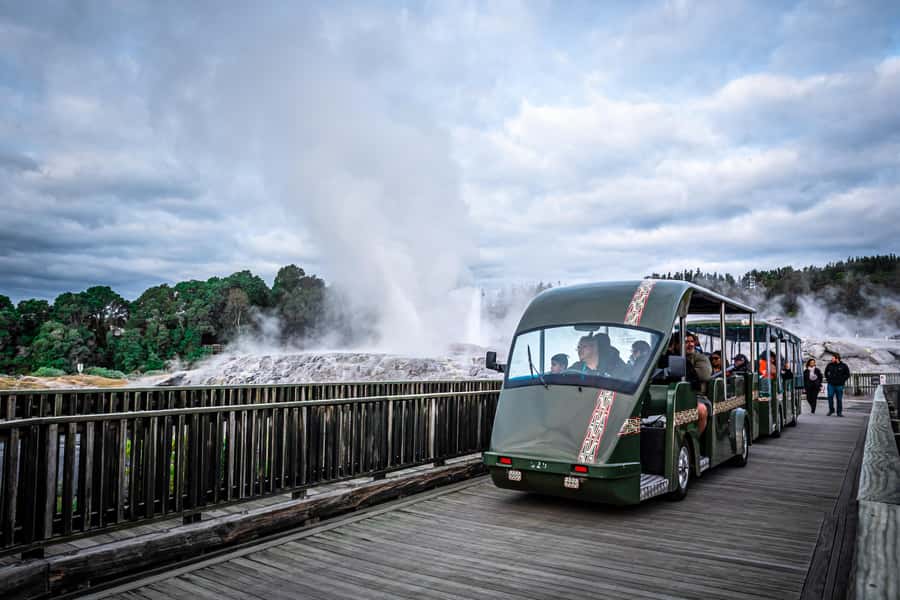
After Wai-O-Tapu, the day shifts from geothermal spectacle to guided depth at Te Puia. Your visit includes a guided tour, with a 90-minute walk through the geothermal valley where you’ll see the mighty Pōhutu Geyser. This geyser is often described as the world’s largest geyser, and regardless of the wording, the scale is the point. You’re not just watching steam—you’re seeing a major geothermal feature at work.
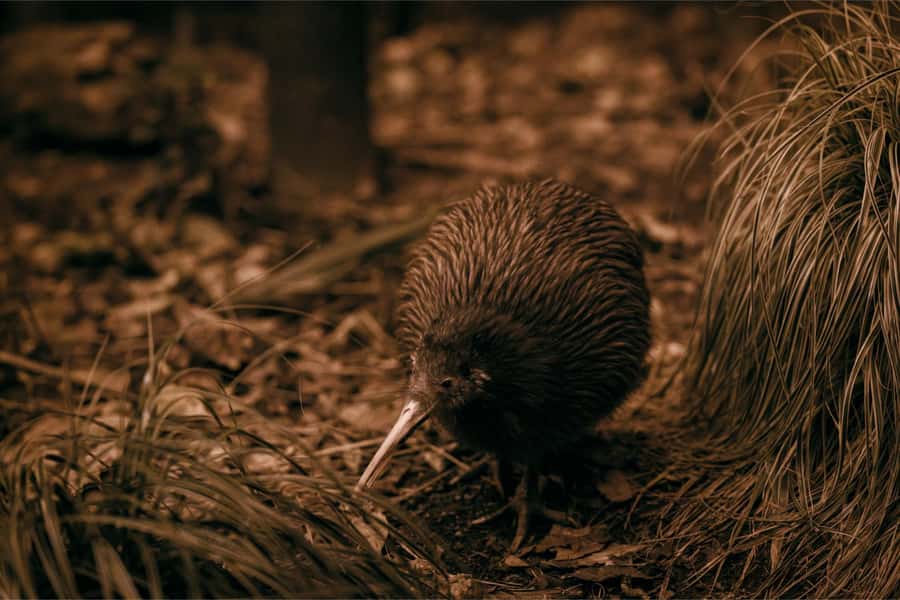
Te Puia also includes stops that go beyond geysers. You’ll see the Kiwi Conservation Centre, plus the New Zealand Māori Arts and Crafts Institute. Even if you’re not a “wildlife person,” the kiwi element is a nice contrast to the geology: it reminds you this region isn’t only heat from the earth, it’s also conservation and living culture.
A practical takeaway: the geothermal valley walk is a real walk, not a casual stroll. Stick with the group, pay attention to where the best views are, and don’t get caught lingering at every side feature unless you’re sure you can still catch the main geyser views.
Te Aronui a Rua: pōhiri welcome and haka that’s more than a performance

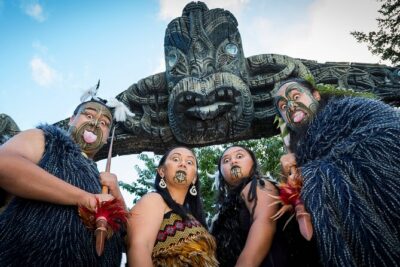
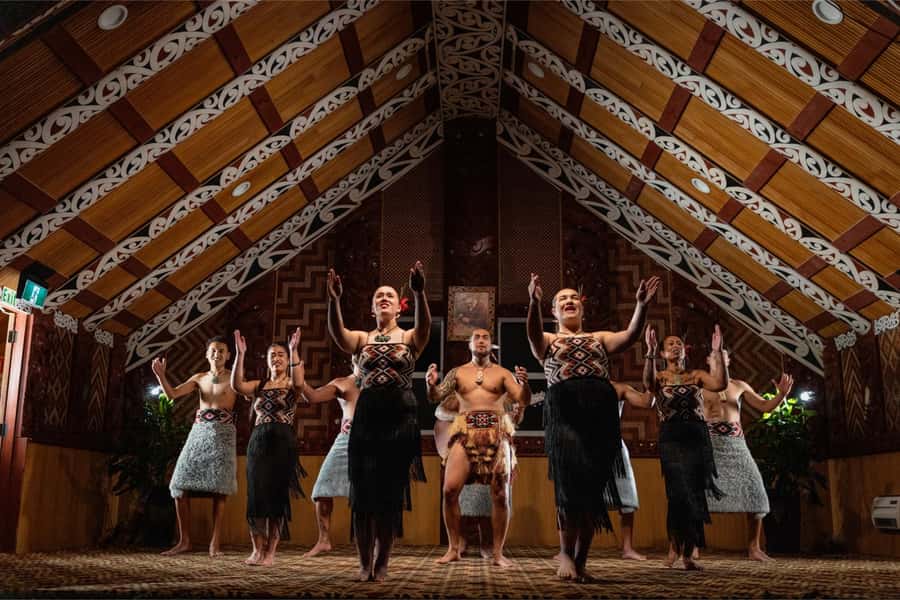
This is the cultural heart of the tour, and it’s one of the most praised parts. At Te Puia, you’ll experience the Te Ra + Haka experience in the carved meeting house, Te Aronui a Rua. Instead of treating Māori culture as a side show, the program builds a sequence: pōhiri (traditional welcome), waiata (song), mōteatea (traditional chant), poi, and haka.
The haka performance is powerful and physical, and the best part is that it’s framed as tradition and meaning, not just a dramatic moment for photos. You’ll get live English guidance from your tour leader throughout the day, and that context helps you understand what you’re seeing and hearing.
In recent departures, guides like David, Aaron, Jason, Matt, Chris, Jaime, Dean, and Alfredo have been mentioned in feedback for their energy and ability to keep the cultural program clear and respectful. You can expect live commentary and a guide who helps connect the geothermal sites to the people and stories of the region.



Group size and pacing: what small-group comfort really changes
The tour is marketed as small group, and in practice it often feels like a minivan-sized day rather than a large coach. One recent group was 11 passengers, which matters more than you might think. Smaller groups make it easier to hear the guide, move quickly between meeting points, and avoid the stress of “where is everyone?”
Pacing is the trade-off. This trip is packed—two major geothermal areas and a full cultural program—so you’ll be moving with purpose. Some people love that structure; others might wish for more time in Wai-O-Tapu. Either way, the best strategy is the same: listen at the start, follow the guide’s timing, and decide early what you want your photos to capture.
You’ll also get comfort stops during the drive, and guides often keep the day running smoothly so everyone returns on time. Still, you’ll do best if you’re punctual for each pickup and ready at the designated rendezvous points.
What to pack (and what to skip) for a smooth 12-hour day
Because food and drinks aren’t included, your day depends on what you bring. I recommend packing snacks and water if you can, especially if you’re sensitive to long gaps between meals. If you prefer a more complete meal, bring a simple lunch or sandwich-style food so you’re not hunting for quick options under time pressure.
For gear, keep it practical:
- Comfortable walking shoes for geothermal terrain and museum-style walking
- A light layer for temperature swings between steam areas and indoor cultural spaces
- A small day bag for water and snacks
- A phone with enough battery for long photo and video moments
Also keep your expectations realistic. You’re seeing multiple big sites in one day, so you won’t get “slow travel” time. But you will get a well-structured overview that makes Rotorua make sense fast.
Price and value: is $236 per person worth it?
At $236 per person for a 12-hour small-group day trip, this isn’t a bargain. But it can be good value if you’re comparing against the cost of doing two separate Rotorua activities plus transportation from Auckland.
Here’s where the value comes from:
- Hotel pickup and drop-off: you’re not driving yourself or arranging separate transfers.
- Admission included for Wai-O-Tapu: that saves both money and time.
- Te Puia Te Ra + Haka experience: includes the guided program and performance elements.
- Guide and live commentary: you’re paying for context, not only access to sites.
If you’re traveling as a group of two or three, this can be even smarter, because pickup logistics get harder when you try to do it on your own. If you’re the type who wants long downtime at attractions and zero scheduling, the cost may feel high because the day is intentionally full.
In plain terms: if you want Rotorua highlights without spending your whole trip planning, the $236 price can feel fair. If you want freedom to linger for hours at one place, you’d likely prefer a slower, self-paced format.
Who should book this Rotorua day trip from Auckland
This tour fits best if you:
- Want a fast first look at Rotorua’s geothermal zones and Māori culture
- Like guided stories and clear explanations as you walk
- Prefer small-group logistics with hotel pickup over renting a car
- Are comfortable with medium walking demands and a long day
I’d skip it if you:
- Get stressed by tight schedules and quick transitions
- Have limited mobility and would struggle with walking around geothermal and cultural sites
- Need food to be included, since food and drinks aren’t part of the package
Should you book this Auckland to Rotorua tour
Yes, if your goal is to see both geothermal power and Māori culture in one day, with pickup handled and guided time built in. The two geyser moments—Lady Knox at Wai-O-Tapu and Pōhutu Geyser at Te Puia—are the kind of experiences that don’t feel replaceable, and the Te Aronui a Rua program adds meaning rather than just spectacle.
Book it when you’re ready for a full 12-hour push: show up early for pickup, pack snacks, wear good shoes, and focus on the main sights. If you do those basics, the day tends to feel smooth and memorable instead of chaotic.
FAQ
How long is the Auckland to Rotorua tour?
The total duration is 12 hours.
What is included in the $236 per person price?
The price includes hotel pickup and drop-off, Wai-O-Tapu admission, Te Puia Te Ra + Haka experience, and a guide with live English commentary. Food and drinks are not included.
Do I need to buy tickets for Wai-O-Tapu?
No. Wai-O-Tapu admission is included, and you skip the ticket line.
What will I see at Te Puia?
You’ll take a guided tour that includes a walk through the geothermal valley to see the Pōhutu Geyser, along with the Kiwi Conservation Centre and the New Zealand Māori Arts and Crafts Institute. You also attend the Te Ra + Haka experience.
What Māori elements are part of the Te Puia performance?
The program includes a pōhiri welcome, waiata, mōteatea, poi, and haka in the carved meeting house, Te Aronui a Rua.
Is the tour a good fit for families and children?
Children must be accompanied by an adult. The tour does require a medium level of fitness because you’ll be walking around geothermal and cultural parks.
Do I need a car to do this tour?
No. Hotel pickup and drop-off are included from selected locations in Auckland.
What language is the tour guide?
The tour guide provides live commentary in English.
Is free cancellation available?
Yes. You can cancel up to 24 hours in advance for a full refund.